




What to Do in the Azores: The Ultimate Multi-Island Itinerary
A logical 10-to-14-day route connecting nine Atlantic worlds, from São Miguel's crater lakes to the basalt shorelines of São Jorge.
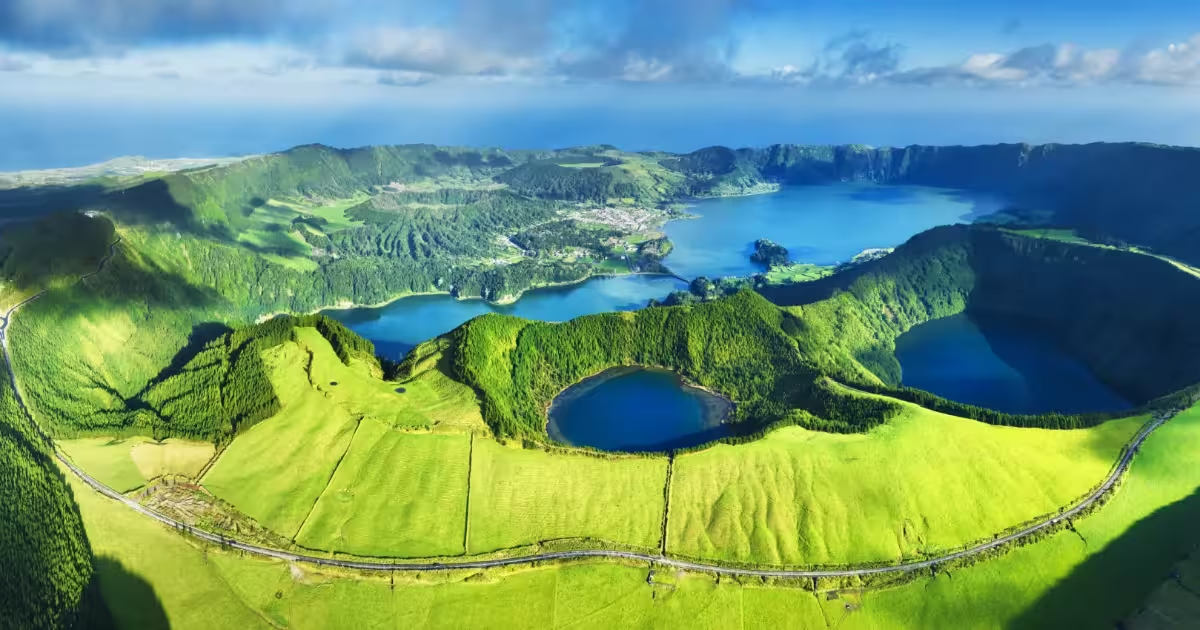
Scattered across 600 kilometres of open Atlantic, the nine islands of the Azores are not one destination but nine distinct volcanic worlds connected by ferries, small aircraft, and a shared geological restlessness. A well-planned 10-to-14-day itinerary threads São Miguel's crater-nested lakes, Pico's towering summit, Faial's maritime hub, and São Jorge's mist-shrouded fajãs into a single coherent journey without wasting a single day at an airport gate.
Why Treat the Azores as Nine Separate Worlds Rather Than One Island?
The Azores Archipelago sits on the Mid-Atlantic Ridge, where the Eurasian, North American, and African tectonic plates converge. That collision point explains everything: the boiling geothermal pools at Furnas, the perfectly circular calderas at Sete Cidades, the blackened lava fields of Pico, and the abrupt coastal shelves known as fajãs along São Jorge. Each island formed through distinct volcanic episodes over the last eight million years, and the differences in geology translate directly into differences in landscape, culture, and activity.
São Miguel, the largest island at roughly 745 square kilometres, functions as the natural gateway because it hosts the archipelago's main international airport, João Paulo II (PDL), which receives direct flights from Lisbon, London, Boston, and Toronto. Terceira, the second most connected island, has Lajes Airport and serves as a practical eastern hub. The Central Group — Pico, Faial, and São Jorge — clusters within 30 kilometres of one another, making ferry crossings between them practical and often faster than the airport security queues that would replace them.
Treating each island as a separate chapter rather than a pin on a single map changes how you move. Suddenly, a 30-minute ferry from Horta to Madalena is not a transfer — it is a crossing from a cosmopolitan marina culture to the shadow of Portugal's highest mountain.
The Western Group (Flores and Corvo) adds a further five hours by ferry or 45 minutes by SATA prop-plane from Faial. For a 10-to-14-day trip, most travellers skip Flores unless they are specifically chasing remote hiking or SCUBA diving in near-pristine water. First-time visitors gain more by spending extra nights in the Central Group than by rushing westward.
How Should You Structure Your Azores Portugal Itinerary Day by Day?
The most logical structure for a 10-day trip places São Miguel at the beginning and at the end, using the island as both the arrival gateway and the departure buffer. Days 1 through 4 cover São Miguel; days 5 through 9 move into the Central Group via a SATA/Azores Airlines intra-archipelago flight to Faial (FHO) or Pico (PIX); and day 10 returns to São Miguel by air before an international departure the following morning.
For a 14-day version, add two nights on Terceira (flying PDL-TER or sailing on the Atlântico Line ferry, a crossing of approximately 7 hours) between arrival on São Miguel and departure to the Central Group, plus an additional night on each of the Central Group islands. Terceira's UNESCO-listed capital Angra do Heroísmo, founded in the 15th century and the first city in the western hemisphere to achieve that status, justifies its own dedicated half-day walking tour of the baroque street grid, the São Sebastião fortress, and the Monte Brasil volcanic promontory.
Days 1-4 | São Miguel: Arrive in Ponta Delgada, the archipelago's largest city with a population of roughly 68,000. Day one recovers from travel. Day two is committed to Sete Cidades — the twin lakes (one green, one blue, separated by a bridge) sitting inside a caldera 5 kilometres wide. Day three moves to Furnas Valley, where geothermal vents heat the ground to over 100°C and local restaurants lower pots of Cozido das Furnas, a slow-cooked meat and vegetable stew, into volcanic fissures for six hours. Day four suits a coastal kayaking excursion from Vila Franca do Campo, where an islet formed by a collapsed underwater caldera creates a near-circular natural swimming lagoon.
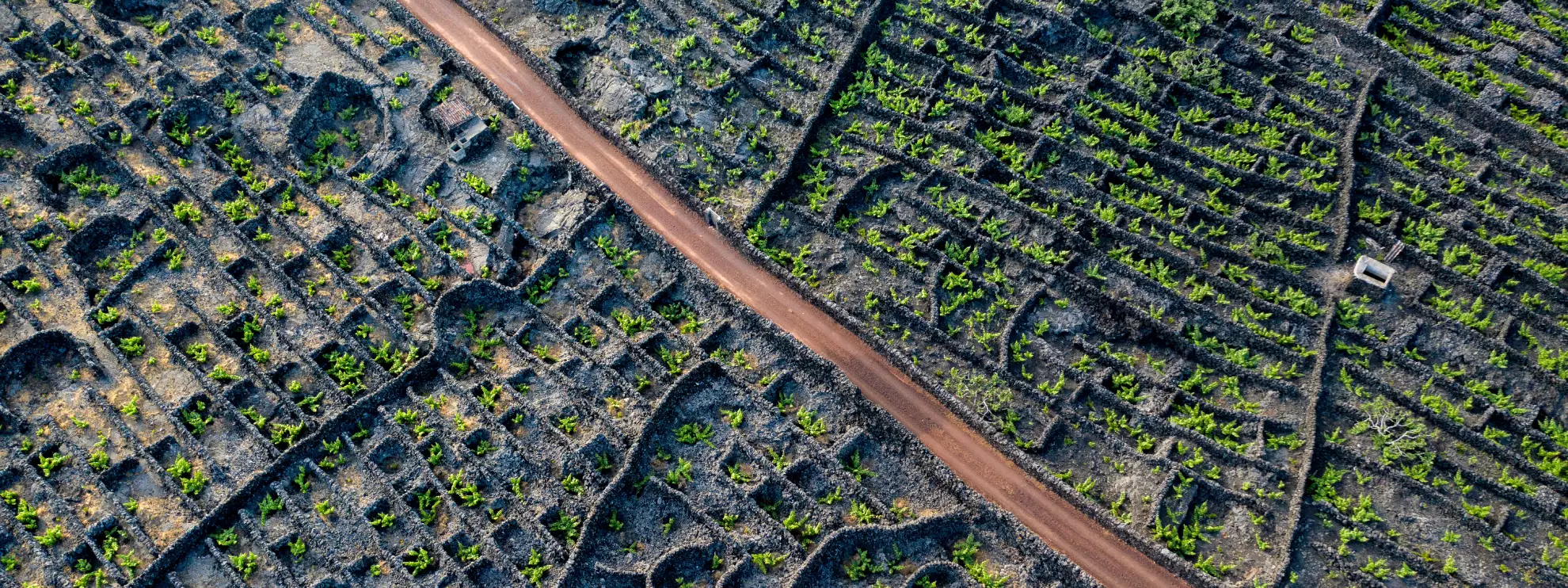
Days 5-7 | Faial and Pico: Fly from PDL to FHO (flight time approximately 45 minutes) and spend the first afternoon on Faial's waterfront. Horta Marina, one of the busiest transatlantic yacht stops in the Atlantic, is covered in hand-painted murals left by sailors since the 1940s — a tradition started informally and now spanning thousands of vessels. The Capelinhos Volcano, which erupted between 1957 and 1958 and added 2.4 square kilometres of new land to Faial's western tip, presents a lunar landscape of grey ash and fractured basalt reachable via the Capelinhos Interpretation Centre. Take the Atlântico Line ferry from Horta to Madalena on Pico Island — the crossing takes 30 minutes and offers a direct view of Ponta do Pico, the island's 2,351-metre summit, the highest point in Portugal. Arrange a pre-dawn summit ascent with a licensed guide: the climb takes 3 to 4 hours each way and requires registration with the Pico Natural Park. The UNESCO-protected vineyard landscape on Pico's southern coast, a mosaic of basalt currais (low stone enclosures protecting Verdelho grapevines from Atlantic wind since the 15th century), is a 30-minute drive from Madalena and requires no effort beyond slowing the car down.
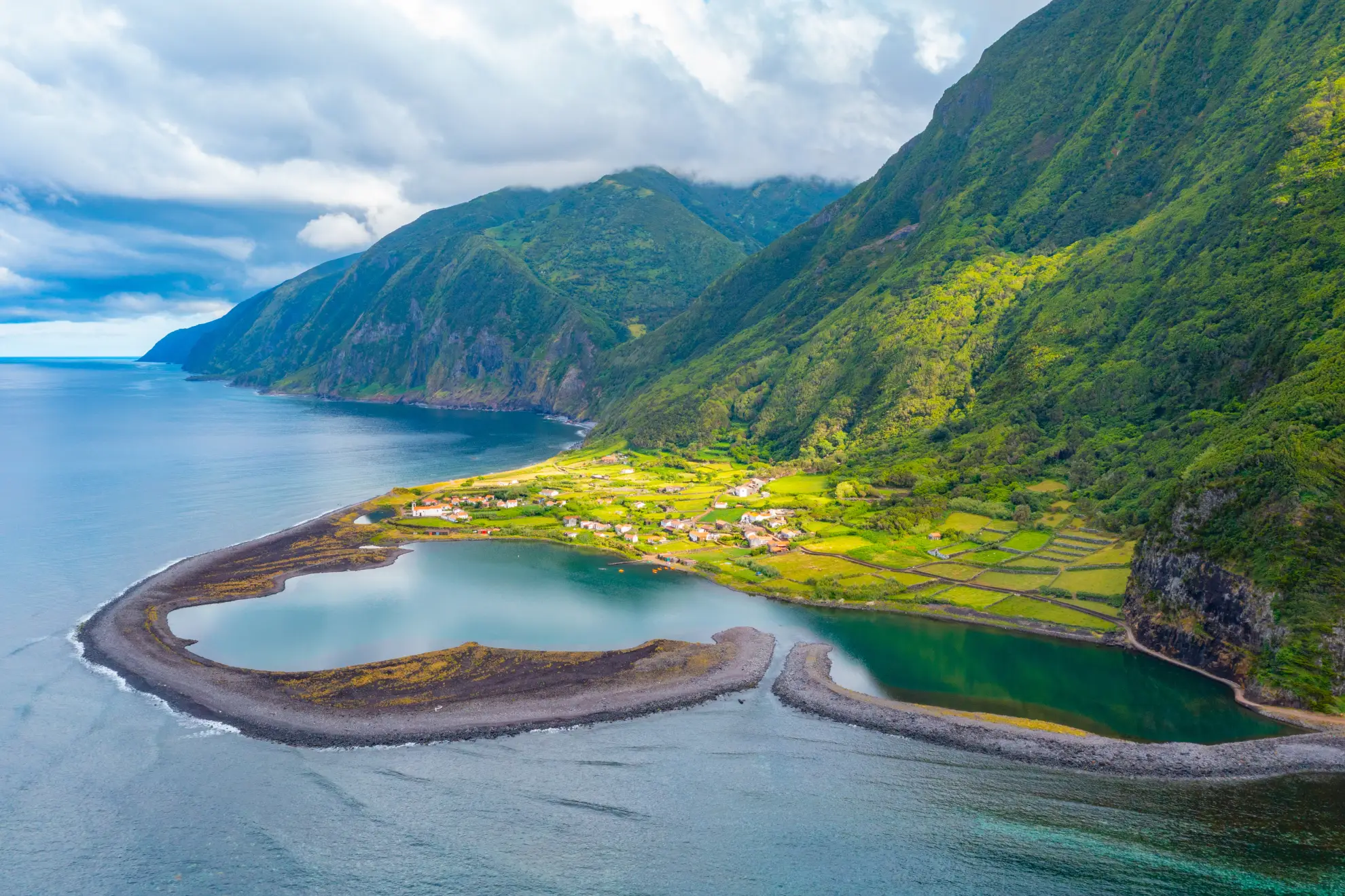
Days 8-9 | São Jorge: The Atlântico Line ferry from Madalena to Velas on São Jorge takes approximately 45 minutes. São Jorge is the island most likely to convert a casual visitor into a repeat traveller. Its north coast drops almost vertically from a central ridge reaching 1,053 metres down to the fajãs: flat, fertile, black-sand terraces formed by ancient lava flows and rockslides that reach the sea. The hike from Fajã de Santo Cristo down to Fajã da Caldeira de Santo Cristo, roughly 3 kilometres one way, passes through semi-tropical microclimates where wild orchids grow beside endemic Azorean laurel forest. Fajã da Caldeira de Santo Cristo hosts Portugal's only natural lagoon where clams (ameijoas) grow wild, harvested by the handful of families who still live there year-round.
The fajãs of São Jorge exist in a different relationship with weather than the rest of the island above them. While mist closes the central ridge, the fajãs can sit in clear Atlantic light, effectively creating their own microclimate 500 metres below the trail head.
Days 10-14 (extended option): Return to São Miguel via SATA from Pico or Faial (connections exist most days, flight time 45-55 minutes). Use the final nights in Ponta Delgada to revisit any missed sites, particularly Lagoa do Fogo, a protected crater lake in the centre of the island with no commercial infrastructure on its banks, and the thermal pools of Caldeira Velha, a forest waterfall coloured green by algae fed by geothermal minerals.
What Are the Best Ways to Get Between Azores Islands in 2026?
Inter-island transport in the Azores operates on two systems: SATA Air Açores (the regional carrier, operating ATR 72-600 turboprop aircraft) connects all nine inhabited islands, with PDL, TER, and FHO serving as the three main hubs. The Atlântico Line ferry operates within the Central Group (Faial, Pico, São Jorge, Graciosa, Terceira) and the Western Group (Flores, Corvo), with schedules running year-round but subject to suspension during Atlantic swell events, particularly between November and March.
For the Central Group triangle, ferry travel is almost always preferable to flying. The 30-minute Horta-to-Madalena crossing costs roughly €8-12 per person as of 2025 pricing, requires no airport check-in, and can be booked via the Atlântico Line website up to 30 days in advance. For the Madalena-to-Velas (São Jorge) leg, the ferry takes 45 minutes and runs several times daily in summer, reducing to two or three sailings per day in winter. Travellers should book ferry tickets at least 48 hours ahead during July and August, when demand from domestic Portuguese tourists peaks.
Flying makes more sense when crossing between island groups — for example, from São Miguel to Faial, or from Terceira to Pico. SATA flights within the archipelago run on a schedule revised seasonally; the 2026 summer schedule typically launches in late March. Booking intra-island SATA flights more than 60 days in advance significantly reduces prices, which can otherwise spike to €100-plus per segment at short notice.
The Buffer Rule: Always position São Miguel as the final island before your international departure. Ferries and intra-island flights cancel with little warning during North Atlantic weather events, and São Miguel's PDL airport has far more daily international connections than any other island. Leaving yourself one clear night in Ponta Delgada before an early transatlantic departure eliminates the most common cause of missed international connections in the archipelago.
When Is the Best Time to Visit Azores Portugal?
The Azores experiences a subtropical oceanic climate (Köppen classification Cfb) that keeps temperatures moderate year-round: average highs range from 16°C in February to 25°C in August. The islands never freeze and rarely exceed 30°C. The practical implication for travellers is that the Azores has no true off-season, but the experience varies significantly by month.
May through October represents the peak hiking and outdoor season. The summer months of July and August bring the lowest rainfall, the calmest seas (ideal for kayaking, diving, and ferry crossings), and the highest visitor numbers. Hotels in Ponta Delgada, Horta, and Angra do Heroísmo reach capacity on weekends; booking accommodation 3-4 months ahead is standard practice for peak summer travel.
Spring, specifically late April through June, is widely considered the optimal balance of weather, crowd levels, and flora. The island hydrangeas bloom from June onward, lining roads with dense blue and purple walls that have become one of the Azores' most recognisable visual identities. Whale watching operates year-round but peaks between April and October, when sperm whales (Physeter macrocephalus) are most consistently present in Azorean waters, joined by blue whales (Balaenoptera musculus) during the April-June migration window.
Winter travel between November and March suits budget travellers comfortable with occasional ferry cancellations and wetter hiking conditions. The Azores receives approximately 900-1,000 mm of annual rainfall on São Miguel's northern coast, concentrated in the winter months. The thermal pools at Furnas and Terra Nostra Park are, if anything, more atmospheric under cloud cover.
Guided Island Tours: São Miguel & Terceira
Active & Adventure Experiences on São Miguel
Ready to book your Azores Portugal itinerary? Browse all available guided tours and adventure experiences on ToursXplorer and reserve your spot before the 2026 summer schedule fills up.
Click hereWhere to Stay in Azores Portugal: Island-by-Island Overview
Accommodation in the Azores spans solar-converted rural quintas, modern business hotels in Ponta Delgada, and family-run residenciais in Velas on São Jorge. The choice of base significantly affects how much ground you cover each day.
São Miguel: Ponta Delgada has the widest range, from international brands to boutique hotels in the old town. Staying in the city centre puts the ferry terminal for whale watching boats and the main bus connections to Furnas and Sete Cidades within walking distance. The eastern town of Furnas itself hosts several thermal spa hotels if the geothermal valley is a priority.
Faial: Horta is the only practical base. The town is compact enough to navigate on foot, and the marina district concentrates most of the restaurants and guesthouses within 500 metres of the ferry terminal for Pico and São Jorge connections.
Pico: Madalena, the main port town, suits travellers focused on the summit climb or wine culture. São Roque do Pico on the north coast is closer to the Museu do Pico whaling history museum, which documents the island's commercial sperm whale hunting industry, active until 1981.
São Jorge: Velas is the main town and ferry arrival point. For hikers targeting the fajãs of the north coast, renting a car and staying in a rural house between Velas and Calheta is more practical than relying on the island's limited public bus service, which runs twice daily on most routes.
ToursXplorer recommends booking all Central Group accommodation before purchasing intra-island flights, as availability on Pico and São Jorge is significantly tighter than on São Miguel, particularly during July and August.
Azores Portugal Travel Packages: What to Know Before You Book
Booking tours individually on arrival is possible but carries risk during peak season: guided slots to Sete Cidades, Furnas Valley, and the Vila Franca do Campo Islet fill quickly, and some experiences (notably the Pico summit trail, which requires registration and is capped at a daily maximum number of climbers) require advance planning regardless of season.
ToursXplorer lists bookable day tours for São Miguel and Terceira with confirmed departure times, allowing travellers to structure their itinerary around fixed tour anchors rather than building loosely and filling gaps on arrival. This is particularly useful for the first two days on São Miguel, when jet lag can impair the spontaneous decision-making that independent travel in a less logistically complex destination might allow.
When comparing Azores Portugal travel packages, check whether inter-island transport is included or assumed to be self-arranged. Most tours listed on ToursXplorer operate as standalone day experiences; inter-island flights and ferries are booked separately through SATA and Atlântico Line respectively. Package operators who bundle flights with tours often add a margin that exceeds the cost of independent booking, particularly for travellers already holding international flights into PDL.
Travel insurance covering weather-related transport disruption is strongly advised for any itinerary that includes ferry-dependent inter-island moves between October and April. North Atlantic swell events can ground ferries for 24-48 hours, and the Azores' position at latitude 37-39 degrees North means these events are not rare occurrences.
Planning a multi-island trip to the Azores? ToursXplorer lists curated full-day and half-day tours across São Miguel and Terceira, so you can lock in the key experiences before arranging your inter-island flights and ferry connections.
Frequently Asked Questions
Use SATA Air Açores for inter-group flights (São Miguel to Faial takes roughly 45 minutes) and the Atlântico Line ferry for moves within the Central Group. The Horta-to-Madalena crossing takes 30 minutes and costs approximately €8-12. Book ferries at least 48 hours ahead in July and August. Between October and April, carry flexible plans as swells can suspend ferry services for 24-48 hours.
São Miguel is the essential first-timer island for its crater lakes (Sete Cidades), geothermal valley (Furnas), and connectivity. Pairing it with the Central Group triangle of Faial, Pico, and São Jorge creates the most varied experience within a 10-14 day window. Pico adds Portugal's highest summit (2,351 m) and a UNESCO vineyard landscape; São Jorge adds the unique fajã coastal terraces.
Late April through June offers the best balance of weather, crowd levels, and wildlife. Whale watching peaks between April and October, with blue whales (Balaenoptera musculus) present April-June and sperm whales (Physeter macrocephalus) consistent through summer. July and August bring the calmest seas and lowest rainfall but peak accommodation prices and ferry demand. The islands are visitable year-round given the subtropical oceanic climate.
A minimum of 10 days allows 3-4 nights on São Miguel and 4-5 nights split across Faial, Pico, and São Jorge. Fourteen days permits a deeper exploration including 2 nights on Terceira and an extra night on each Central Group island. Fewer than 7 days limits you realistically to São Miguel alone, which still provides a full itinerary given the island's geothermal, coastal, and volcanic attractions.
On São Miguel, day tours handle transport, making a car optional for structured travellers. On Pico, São Jorge, and Faial, a rental car significantly expands access: public buses on these islands run infrequently, often just twice daily on rural routes. On São Jorge in particular, a car is near-essential for reaching the trailheads that descend to the fajãs on the north coast.
Yes, but registration with the Pico Natural Park authorities is mandatory. The park service operates a monitoring system on the mountain and requires climbers to carry a GPS device or use the park's tracker. The ascent of 2,351 metres takes 3-4 hours from the base shelter at roughly 1,220 metres altitude. Weather changes rapidly above 1,800 metres; the summit is cloud-free most reliably in July and August between 0500 and 1000 local time.