




Free Things to Do in Lisbon: A Complete Local's Guide for 2026
From panoramic miradouros and cobbled neighborhood walks to cultural Sundays and sun-drenched waterfront stretches, Lisbon rewards every curious traveller.
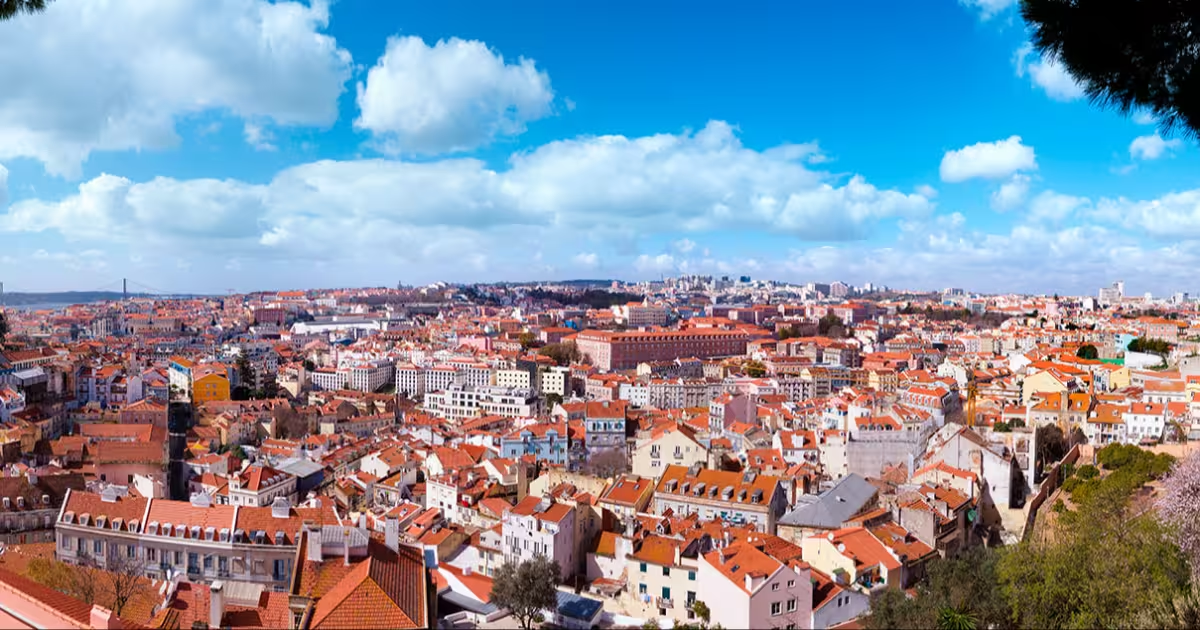
Lisbon is one of the few European capitals where the most memorable experiences genuinely cost nothing. The city's topography, its seven hills, its river-facing terraces, and its dense web of historic neighborhoods conspires to put extraordinary views, living culture, and centuries of history within reach of any visitor willing to walk. This guide maps the best free things to do in Lisbon across 2026, district by district.
Which miradouros offer the best free views in Lisbon?
Lisbon's viewpoints, known locally as miradouros, are public terraces built into the city's hillsides and they cost precisely nothing to enter. The city counts more than 30 recognized viewpoints, but a handful stand above the rest in terms of panorama and atmosphere.
Miradouro da Senhora do Monte sits at roughly 150 metres above sea level in the Graça district and is widely considered the highest accessible viewpoint within the historic city. On a clear day the view spans the Castelo de São Jorge to the west, the dome of the Panteão Nacional to the east, and the silver width of the Tagus River beyond. Because it requires a deliberate climb through residential streets, it draws fewer tour groups than the better-known Portas do Sol.
Miradouro da Graça, located on the same hill about 400 metres further west, faces directly toward the castle and has a small kiosk that has operated since 1928. Locals gather here in the late afternoon, particularly on weekday evenings when tourist numbers drop.
"The sunset at Miradouro de Santa Catarina, in the Bairro Alto district, faces due west toward the 25 de Abril Bridge and the Arrábida hills across the Tagus. In summer, musicians often play nearby on the steps, turning the terrace into an informal open-air venue without a ticket in sight."
Miradouro de Santa Luzia, at the entrance to Alfama, is framed by bougainvillea and 18th-century azulejo tile panels depicting Lisbon before the 1755 earthquake. The tiles alone are a small history lesson. The adjacent Portas do Sol terrace looks directly east over Alfama's rooftop maze toward the Igreja de São Vicente de Fora, a church completed in 1629.
Practical note: all miradouros are accessible on foot and most are reachable by Lisbon's historic tram and funicular network. Tram 28E passes near Graça and Santa Luzia, though the walk up from Alfama adds context the tram cannot offer.
Are museums in Lisbon free on Sundays in 2026?
Several of Lisbon's most significant public museums offer free or reduced-price entry during specific time slots, and this policy has remained consistent into 2026. The details vary by institution so verifying directly before visiting is always advisable, but the general framework is well established.
The Museu Nacional de Arte Antiga (MNAA), located in the Lapa district along the Rua das Janelas Verdes, holds the country's largest collection of Portuguese painting from the 15th to 19th centuries. The museum typically opens free to all visitors on Sunday mornings until 2 pm. The collection includes Nuno Gonçalves' Painéis de São Vicente, painted around 1470, which is one of the most studied works in Portuguese art history.
The Calouste Gulbenkian Museum in Avenidas Novas holds a collection assembled by the Armenian-British oil magnate Calouste Gulbenkian (1869 to 1955) and gifted to Portugal in his will. The museum and its surrounding 7.5-hectare garden are free on Sundays. The garden, designed between 1965 and 1969 by landscape architects Gonçalo Ribeiro Telles and António Viana Barreto, is freely accessible throughout the week as a public park and is one of the calmer green spaces in the northern part of the city.
"Many visitors spend an entire morning in the Gulbenkian garden without entering the museum at all, using the lawns and water features as a quiet counterpoint to Lisbon's more intense urban rhythms."
The Museu do Azulejo, housed in the former Madre de Deus convent in the Xabregas district, documents 500 years of Portuguese tilework and also participates in free Sunday morning entry. The 18th-century Baroque church attached to the convent is itself a reason to visit.
National monuments managed by DGPC (Direção-Geral do Património Cultural) including the Jerónimos Monastery in Belém and the Torre de Belém are free on Sunday mornings before 2 pm for all visitors. The Jerónimos Monastery was begun in 1501 under King Manuel I and took roughly 100 years to complete. Arriving before 10 am on a Sunday is the single most effective strategy for avoiding queues while paying nothing.
Which Lisbon neighborhoods work best for a free self-guided street tour?
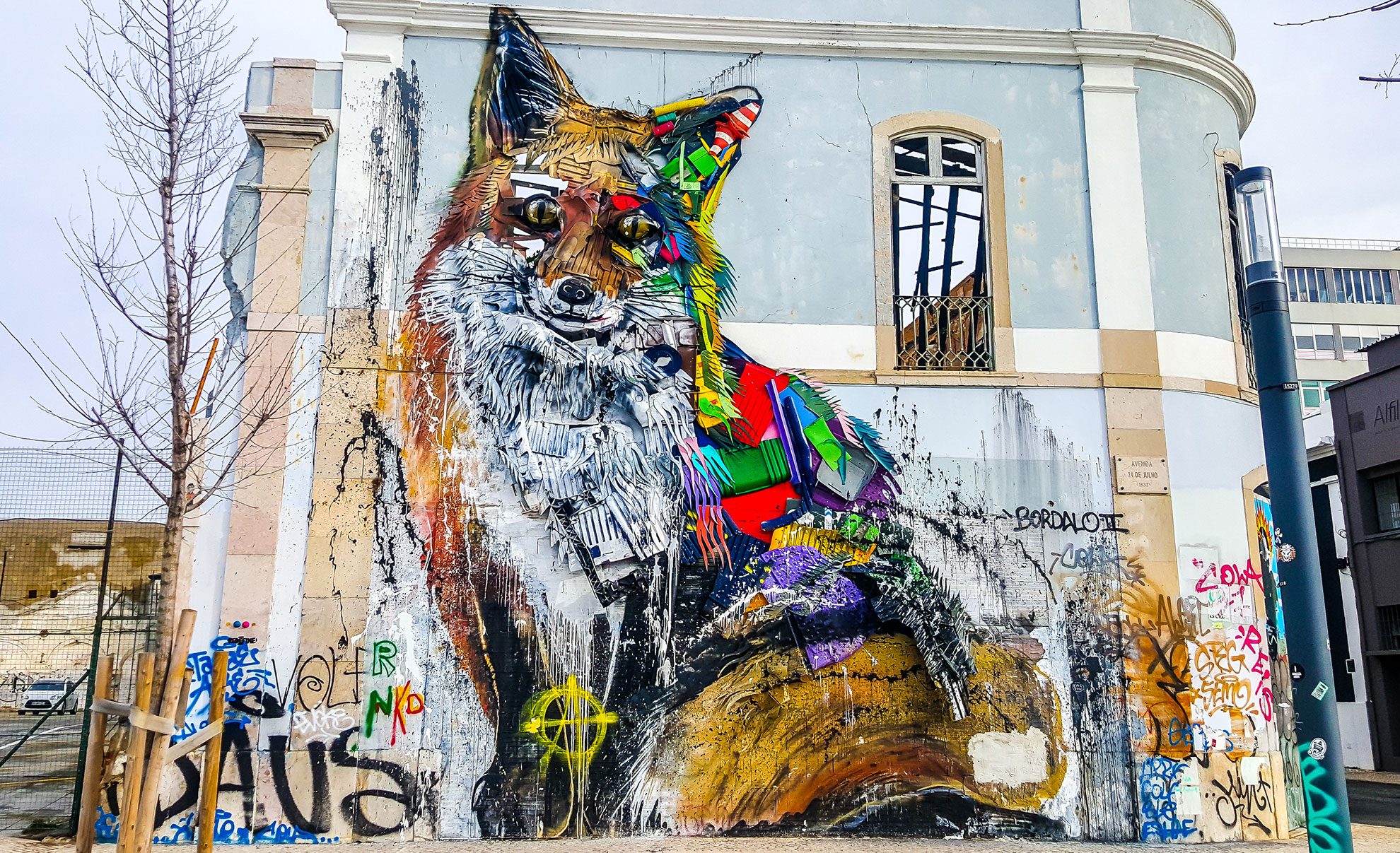
Lisbon functions as an open-air museum in ways that few European cities can match. Three neighborhoods in particular offer dense concentrations of visual culture, architectural history, and street life that require no ticket and no guide.
Alfama is the oldest continuously inhabited district in Lisbon, surviving the 1755 earthquake largely intact because its bedrock sits on solid limestone rather than the softer soils that liquefied further west. The district's Moorish street plan, dating from before the Christian reconquest of 1147, produces a labyrinth of alleys, staircases, and small squares that reward unhurried exploration. The Feira da Ladra, a flea market held on Tuesdays and Saturdays at Campo de Santa Clara, is free to browse and has operated in various forms since at least the 13th century.
Mouraria, immediately north of Alfama and historically the neighborhood where Lisbon's Moorish population was resettled after 1147, has become a focal point for community murals and tile art. The Intendente square, once considered one of the city's most neglected corners, has been transformed since 2013 into a lively plaza framed by 19th-century buildings, community gardens, and a consistent rotation of street performances.
Marvila, an industrial riverfront district east of Alfama, has emerged since 2017 as Lisbon's primary address for large-scale urban art. Former warehouses along the Rua do Açúcar and Rua do Beato carry murals by Portuguese and international artists including Vhils (Alexandre Farto), whose signature chiseled portraiture appears on building facades across the city. A self-guided walk through Marvila from Braço de Prata station to Beato takes approximately 90 minutes and covers the densest concentration of large-format public art in Lisbon. ToursXplorer maps several itineraries in this area for visitors who want structured context without a fixed tour.
The Bica neighborhood, clinging to the hillside between Bairro Alto and Cais do Sodré, is threaded by the Elevador da Bica funicular track (inaugurated in 1892) and lined with small workshops, vintage stores, and hand-painted shop signs that have remained unchanged for decades. The funicular itself charges a small fare, but walking the adjacent Rua da Bica de Duarte Belo on foot costs nothing and covers the same visual ground.
How do you do the Lisbon waterfront walk for free?
The stretch of riverfront between Cais do Sodré and the Belém district is approximately 7 kilometres and is entirely pedestrian or cycle-path accessible. It is, in practical terms, a free river tour conducted on foot, and it passes some of the most significant landmarks in Portuguese history.
Starting at Cais do Sodré, the recently renovated riverside promenade passes the Mercado da Ribeira (Time Out Market), which opened in its current food hall format in 2014 and is free to enter and explore even without purchasing. The waterfront continues west through the Santos design district, past the Museu de Arte, Arquitetura e Tecnologia (MAAT), where the building's exterior roof terrace is free to walk and offers unobstructed river views. The museum itself charges entry, but the terrace does not.
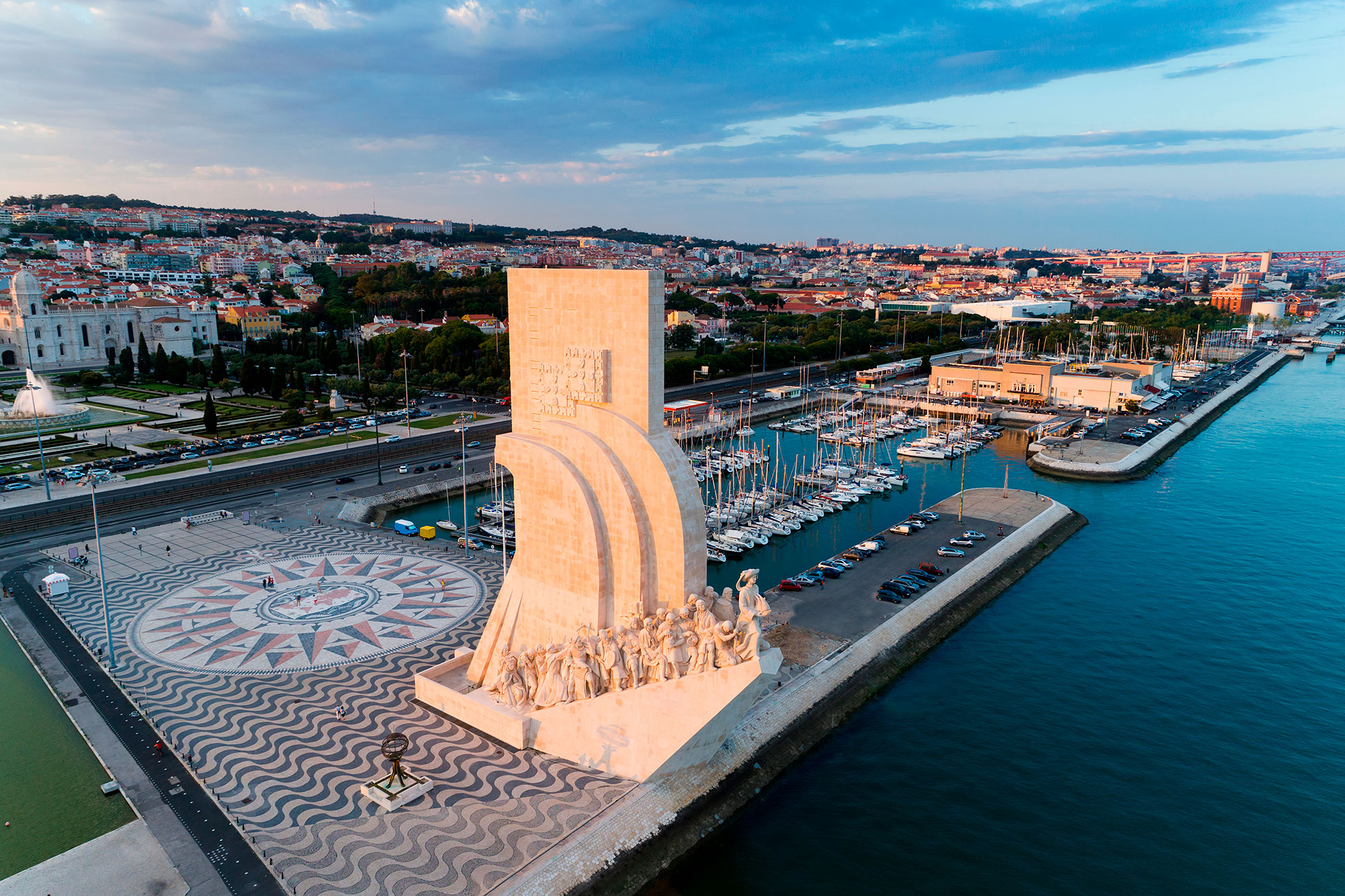
Continuing west, the path reaches Belém, where the 25 de Abril Bridge (opened in August 1966, spanning 2,278 metres between towers) dominates the skyline from directly overhead. The Padrão dos Descobrimentos monument and the exterior of the Torre de Belém are visible from the riverside path at no cost, and the Jardim de Belém, a formal garden between the monastery and the river, is a free public park. The walk in its entirety takes between two and three hours at a relaxed pace, and late afternoon provides the most favorable light for the westward views.
For those using Lisbon's public transit network, the return journey from Belém to Cais do Sodré takes 20 minutes on the Cascais commuter rail line. A single ticket in 2026 costs approximately 2 euros within the Lisboa transport zone.
Lisbon has more to offer than any single day allows. Browse ToursXplorer's full selection of Lisbon tours and experiences to complement your free explorations with guided context, expert local knowledge, and access to areas that reward a deeper look.
Click hereFree outdoor events and summer programmes in Lisbon (2026)
Lisbon's city council runs a seasonal outdoor events programme that brings free concerts, open-air cinema, dance performances, and cultural festivals to public spaces throughout the warmer months. The umbrella programme, operating under the name Lisboa na Rua, typically runs from June through September and uses parks, squares, and waterfront locations as venues. Programming for 2026 will be confirmed through the Lisbon City Council's official cultural calendar, but the format has run consistently since its establishment in 2014.
The Festa de Santo António, held on the night of 12 to 13 June each year, is the city's largest annual street festival and is entirely free. The celebration of Lisbon's patron saint fills Alfama, Mouraria, and nearly every other historic neighborhood with grilled sardines, paper decorations, and informal music. The festival has been observed in Lisbon for several centuries and remains one of the most genuine expressions of city identity available to any visitor.
Jazz concerts in Lisbon's parks, particularly in the Jardim do Torel and occasionally in the Gulbenkian gardens, tend to be free or very low cost in summer and are announced through the Gulbenkian Foundation's cultural calendar. The Eduardo VII Park, covering 26 hectares at the northern end of the Avenida da Liberdade, hosts occasional open-air performances and is permanently free to enter. Its formal hedged garden, the Estufa Fria, charges a small entry fee, but the main park lawns and the long axis view down toward the Tagus require no payment.
The Monsanto Forest Park, covering approximately 900 hectares on the western edge of the city, is Lisbon's largest green space and is free to enter at all points. It contains picnic areas, walking trails, and several viewpoints including the Miradouro do Monumento Natural do Carenque, which overlooks the Tagus estuary and is almost entirely unknown to visitors staying in the city center. ToursXplorer includes Monsanto in several half-day itineraries for travellers who want a genuine break from urban density.
Practical tips for exploring Lisbon on a budget in 2026
Lisbon's public transit network, now fully integrated under the Carris Metropolitana and Metro de Lisboa systems, covers the entire metropolitan area with a single interoperable card. A rechargeable Viva Viagem card costs 0.50 euros and allows travel on metro, buses, trams, and suburban rail. For visitors staying three or more days, a 24-hour or 72-hour unlimited travel pass provides significantly better value than individual tickets.
The city's water, served from public drinking fountains (chafarizes) found throughout the historic center, is safe to drink and reduces the daily cost of staying hydrated. Lisbon's tap water is treated to European Union drinking standards and monitored by EPAL (Empresa Portuguesa das Águas Livres), which has supplied the city since 1868.
Most of Lisbon's parish churches, including the Igreja de São Domingos near Rossio (largely rebuilt after a 1959 fire and deliberately left with its scarred interior visible), the Igreja da Madre de Deus in Xabregas, and the Sé de Lisboa (the cathedral, begun in 1147 on the site of the city's main mosque), are free to enter during opening hours outside of scheduled services.
Street food costs remain reasonable compared to other western European capitals. A pastel de nata at most local bakeries costs between 1.20 and 1.50 euros in 2026. The original recipe pastéis are served at Pastéis de Belém on the Rua de Belém, a bakery operating continuously since 1837, where the price is slightly higher but the historical context is included at no extra charge.
Frequently Asked Questions
Lisbon offers extensive free options in 2026: all miradouros (viewpoints) including Senhora do Monte, Graça, and Santa Catarina cost nothing. Most major national museums including the MNAA and Jerónimos Monastery offer free Sunday morning entry before 2 pm. The 7-kilometre waterfront walk from Cais do Sodré to Belém, all public parks, and neighborhood walks through Alfama and Marvila are permanently free.
Yes. Several key museums offer free entry on Sunday mornings in 2026. The Museu Nacional de Arte Antiga, the Museu do Azulejo, and national monuments including the Jerónimos Monastery and Torre de Belém are free for all visitors until 2 pm on Sundays. The Calouste Gulbenkian Museum is also free on Sundays. Policies can change, so confirming directly with each institution before visiting is recommended.
Lisbon's miradouros are entirely free public terraces. The highest is Miradouro da Senhora do Monte in the Graça district at approximately 150 metres above sea level. Miradouro de Santa Catarina faces west toward the 25 de Abril Bridge and offers some of the city's best sunset views. Miradouro de Santa Luzia, at the entrance to Alfama, includes historic azulejo panels depicting pre-1755 Lisbon. All are reachable on foot.
Alfama is Lisbon's oldest district, with a street plan dating from before the Moorish period, and is best explored on foot for free. Mouraria, immediately north, has community murals and a lively central square at Intendente. Marvila, an eastern industrial district, has the highest concentration of large-scale street art including works by Vhils. A self-guided Marvila walk from Braço de Prata to Beato takes approximately 90 minutes.
The Festa de Santo António on the night of 12 to 13 June is Lisbon's largest and most attended free festival. It celebrates the city's patron saint and fills Alfama, Mouraria, and surrounding neighborhoods with street food, music, and paper decorations. The celebration has taken place annually for several centuries and is considered one of the most authentic expressions of Lisbon's local culture.
Yes. The full 7-kilometre riverside path from Cais do Sodré to Belém is freely accessible to pedestrians and cyclists. It passes the exterior of MAAT (with a free rooftop terrace), the Padrão dos Descobrimentos monument, and the Torre de Belém, all visible at no cost from the path. The Jardim de Belém park along the route is also free. The return trip by commuter rail costs approximately 2 euros.