




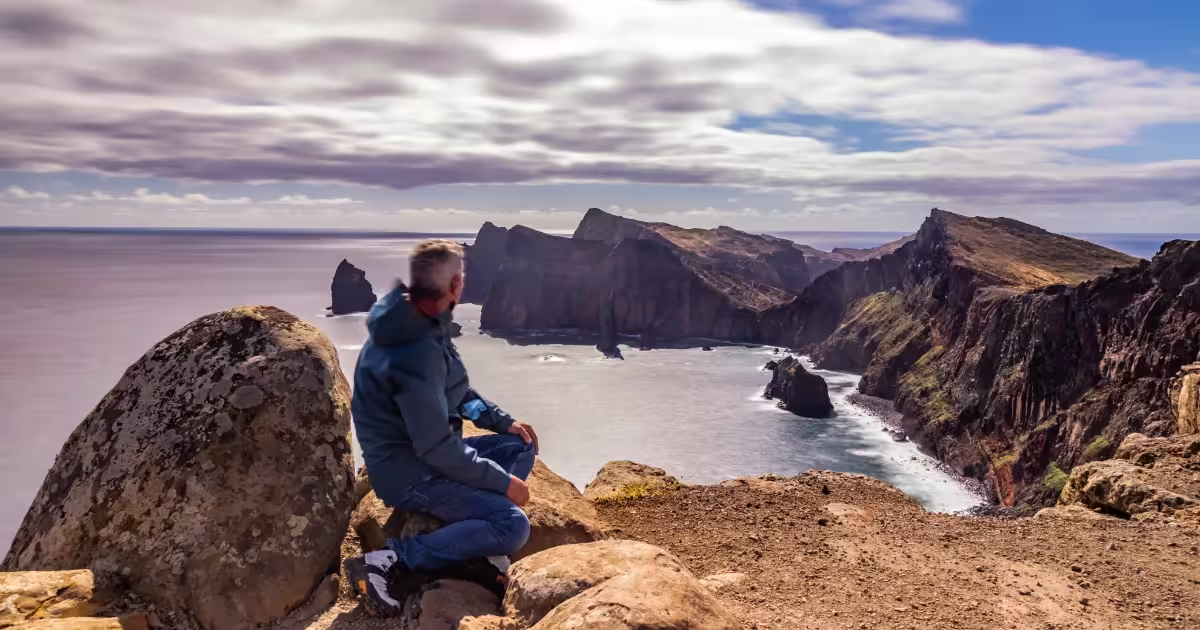
Finding Yourself Again: Solo Travel in Madeira and the Azores
Where the Atlantic Ocean, ancient forests, and volcanic silence give you the space to remember who you are
Portugal's Atlantic islands, Madeira and the Azores, sit hundreds of kilometres from the European mainland, buffered by open ocean and shaped by volcanic forces over millions of years. They are among Europe's safest and most welcoming destinations for solo travelers, offering a rare combination of raw natural landscapes, slow-paced island culture, and the kind of silence that modern life rarely permits. This is where people go not just to see something new, but to feel something again.
Why are more people choosing to travel solo to Atlantic islands?
Global solo travel has grown steadily over the past decade. According to tourism trend reports, solo bookings now account for roughly one in five international trips, with a significant portion made by women traveling alone. The motivations are rarely about adventure for its own sake. More often, solo travelers are professionals who have reached a point of exhaustion, people navigating a life transition, or those who simply need distance from familiar routines to think clearly again.
Madeira and the Azores absorb this kind of traveler naturally. The islands do not demand anything from you. There are no packed festival crowds, no relentless tourist circuits, no pressure to perform enjoyment. You arrive, and the landscape simply receives you.
The Portuguese concept of saudade, a melancholic longing for something felt but hard to name, makes unexpected sense when you stand at the edge of the Atlantic for the first time. It is not sadness. It is recognition.
Portugal consistently ranks among Europe's safest countries, placing in the top five of the Global Peace Index for several consecutive years. On Madeira and the islands of the Azores archipelago, that safety extends to a particular warmth in local culture. Madeiran and Azorean communities are small, often multi-generational, and accustomed to welcoming outsiders without overwhelming them. Solo female travelers consistently report feeling comfortable moving independently, whether on hiking trails, in local cafés, or along coastal roads at dusk.
What makes Madeira the right place for a solo traveler seeking stillness?
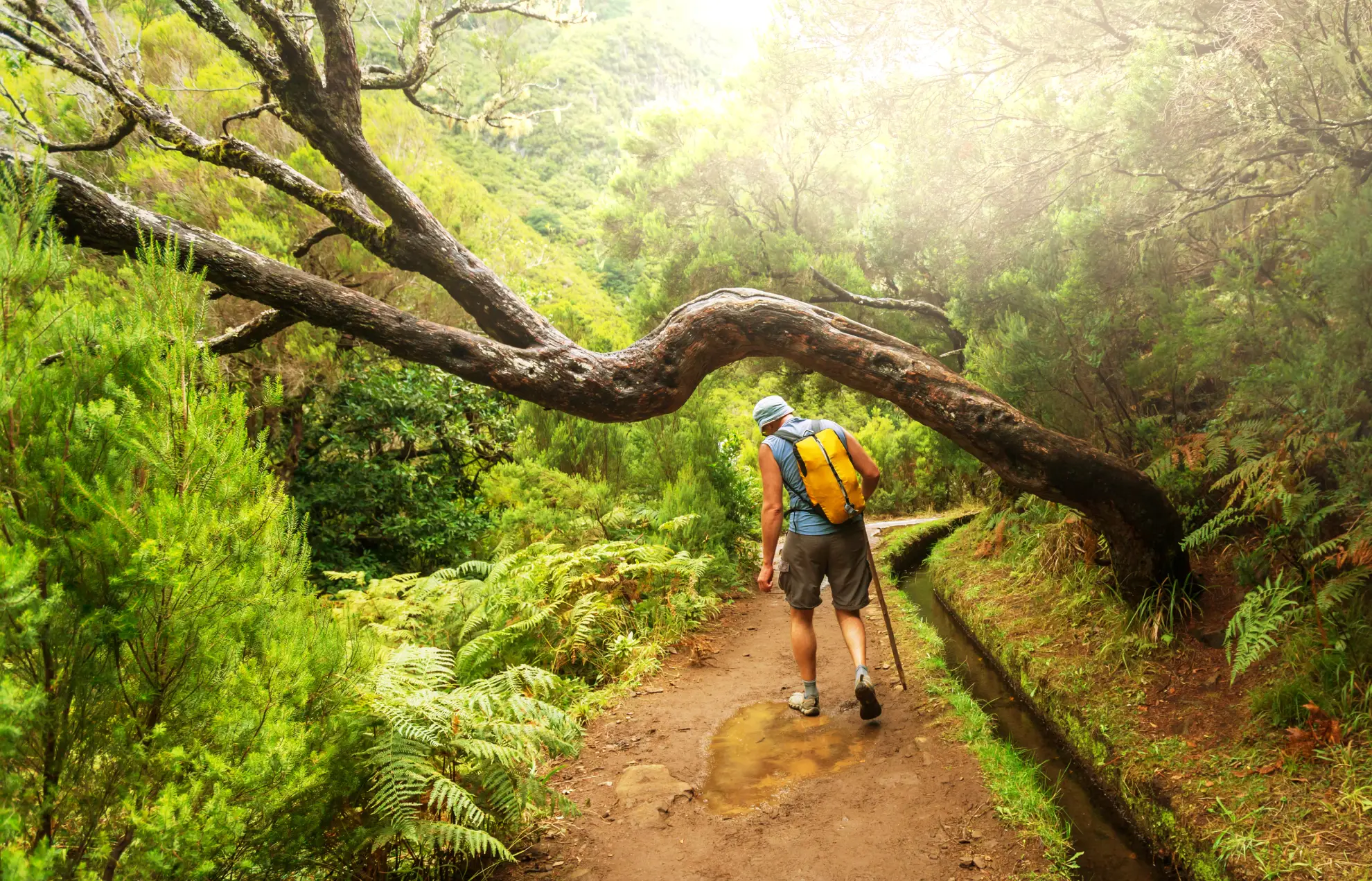
Madeira is a single island of approximately 741 square kilometres, sitting in the Atlantic roughly 1,000 kilometres southwest of Lisbon. Its terrain is vertical and varied: black volcanic cliffs that drop into the ocean, central peaks rising above 1,800 metres, and a network of irrigation channels called levadas that thread through the interior like quiet veins. These levada trails, many of them centuries old and originally built to carry water from the wet north to the dry south, have become some of Europe's most distinctive walking paths.
Walking a levada alone is a different experience from walking it in a group. The paths are narrow, often carved into cliff faces, and surrounded by endemic Laurissilva forest, a relic subtropical rainforest that covers roughly a third of the island and was designated a UNESCO World Heritage Site in 1999. In this forest, you walk under tree heaths (Erica arborea) and Laurel trees (Laurus novocanariensis) that have existed in roughly this form for millions of years. The sound is predominantly water: dripping, running, pooling. The effect is profoundly calming.
The route from Pico do Areeiro (1,818 metres) to Pico Ruivo (1,862 metres, Madeira's highest point) is among the island's most emotionally resonant experiences for solo hikers. The trail covers approximately 7.5 kilometres one way and frequently places you above a sea of clouds, with the peaks of other mountains emerging like islands within an island. Starting at sunrise, around 6:30 in summer, means arriving at Pico Ruivo as the light shifts from pale grey to gold, often entirely alone.
Altitude changes perspective in a way that is almost physical. Standing at 1,862 metres above the Atlantic, with cloud beneath your feet and silence above, the concerns that felt enormous at sea level become, briefly, proportionate.
The Fanal Forest, located in the Paul da Serra plateau in the northwest of Madeira, offers something different: a landscape of ancient, gnarled Laurel trees draped in moss, often wrapped in fog that reduces visibility to a few metres. Fanal is not dramatic in the conventional sense. It is strange, quiet, and slightly disorienting. Solo travelers who seek it out often describe it as one of the most memorable hours of their entire trip, precisely because it requires no activity other than standing still and paying attention.
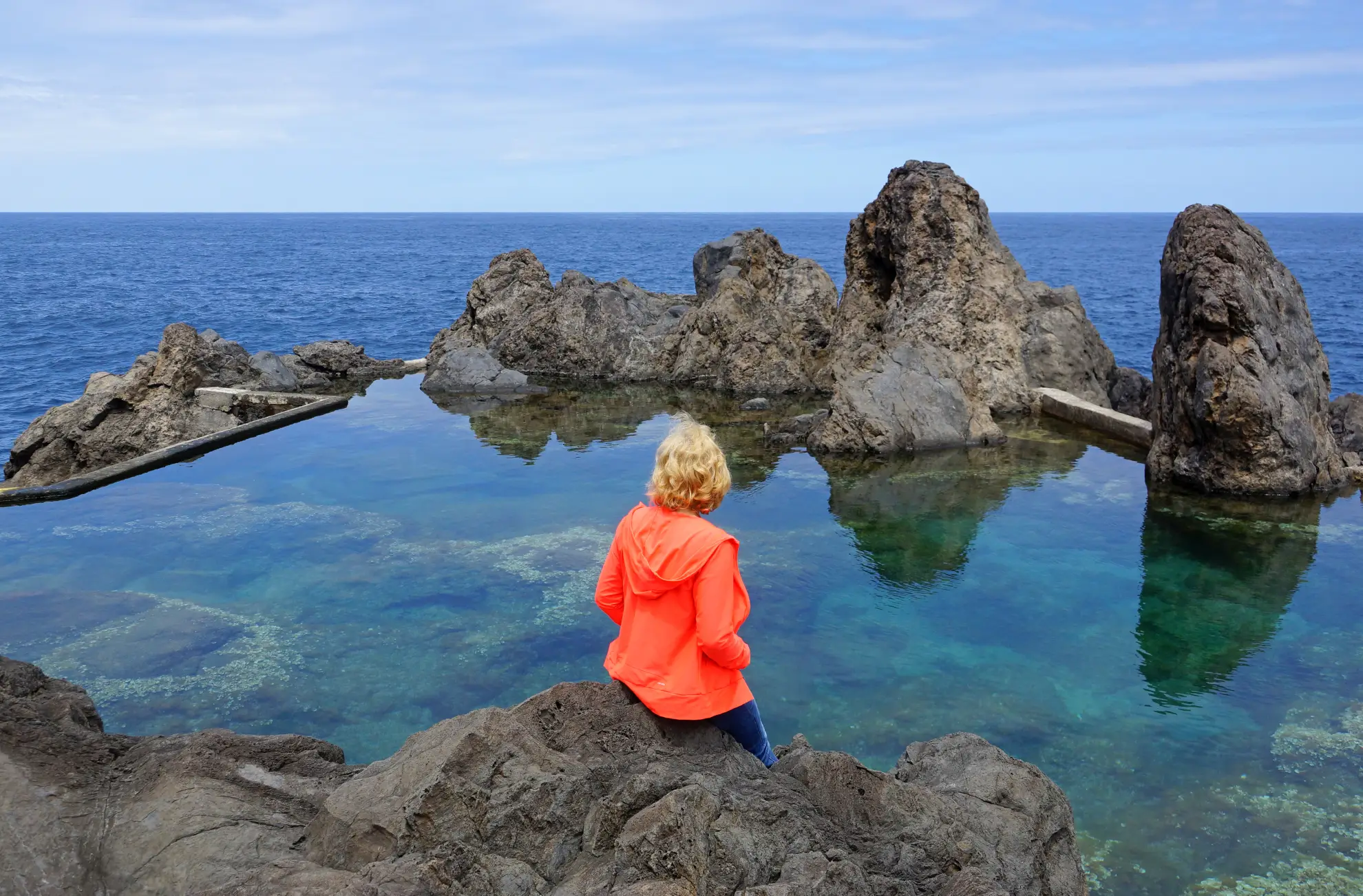
Porto Moniz, on the island's northwestern tip, is home to natural volcanic rock pools filled by the Atlantic. Swimming alone in these pools while waves break against the surrounding lava formations is a reminder of the ocean's indifference to human problems, which, oddly, is exactly what some people need.
Are the Azores safe and welcoming for solo travelers?
The Azores is an archipelago of nine islands spread across approximately 600 kilometres of the mid-Atlantic, between roughly 37 and 40 degrees north latitude. São Miguel, the largest island at 745 square kilometres, serves as the main entry point and contains the archipelago's most dramatic concentrations of volcanic landscape.
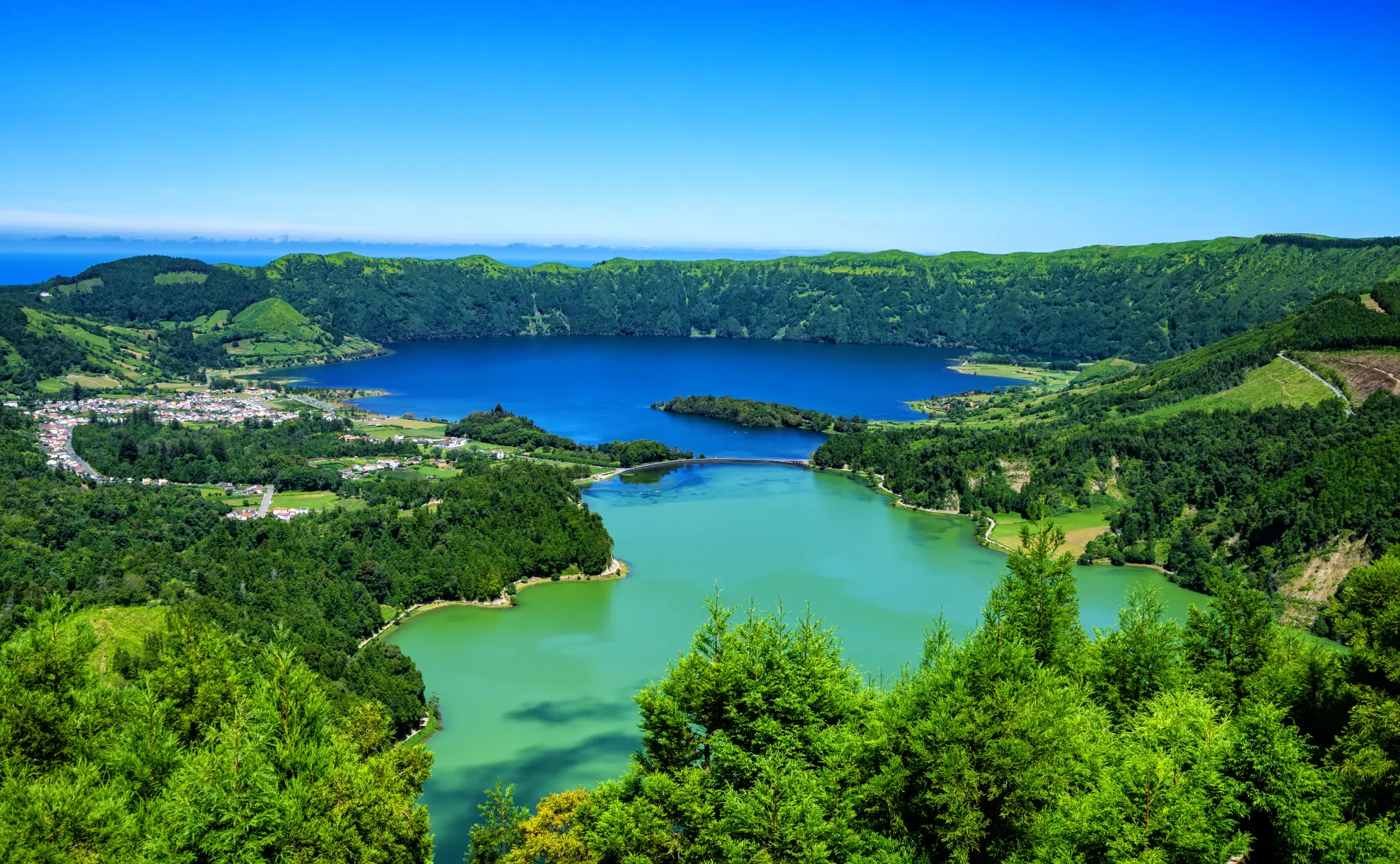
Sete Cidades, located in the western caldeira of São Miguel, is a twin-lake system, one lake appearing green and the other blue depending on light conditions, set within a crater approximately 12 kilometres in diameter. The viewpoint above the lakes, accessible by road or on foot, is among the most frequently cited emotional moments that solo travelers describe in the Azores. The scale of the landscape, combined with the silence of a place with very little traffic and no urban noise, produces a particular clarity.
Furnas, in the eastern interior of São Miguel, is a geothermal valley where the earth visibly works. Hot springs bubble in the town's central park, fumaroles release sulphurous steam along the lake shore, and local restaurants slow-cook cozido das Furnas, a meat and vegetable stew, in pots buried directly in the volcanic soil for six or more hours. Bathing in the thermal waters of Furnas has been practiced since at least the 18th century, and the town retains a quiet, unhurried atmosphere that makes it a natural stop for travelers seeking physical and mental decompression.
For those seeking genuine isolation, the western islands of Flores and Corvo offer landscapes of waterfalls, crater lakes, and steep coastal cliffs with almost no tourist infrastructure. Flores, at 143 square kilometres, receives a fraction of the visitors that São Miguel handles, and its interior, accessible by narrow roads through dense hydrangea hedgerows in summer, feels genuinely removed from contemporary life. Pico Island, dominated by the 2,351-metre Pico Mountain (the highest point in all of Portugal), offers a different kind of intensity: the summit trail is classified as strenuous, taking between six and eight hours round trip, and the experience of reaching it alone has a particular weight.
ToursXplorer lists experiences across both archipelagos that cater specifically to solo travelers who want guided access to these landscapes without sacrificing the feeling of personal exploration. Joining a small-group guided tour is one of the most practical ways for solo travelers to access remote terrain safely while still meeting other people at a natural pace.
What emotional experiences do solo travelers most often describe in Madeira and the Azores?
Travel writers and tourism researchers have documented a consistent pattern in traveler testimonials from both archipelagos. The experiences that stay with people are rarely the most visually spectacular ones. They tend to be quieter: a conversation with a farmer on a levada path, the sound of rain on a café window in Furnas, the moment a dolphin surfaces three metres from a small boat in open water, the realisation at the top of Pico Ruivo that you are not, in fact, as tired as you thought you were.
Dolphin encounters in the waters around both Madeira and the Azores are among the most emotionally reported wildlife experiences in the Atlantic. Common dolphins (Delphinus delphis), bottlenose dolphins (Tursiops truncatus), and sperm whales (Physeter macrocephalus) inhabit these waters year-round. The Azores in particular sits on deep oceanic ridges that support exceptional marine biodiversity. Being in the water alongside a pod of dolphins, an experience available through regulated swim-with-dolphins tours operating under Portuguese marine wildlife guidelines, is described by many travelers as a moment of complete presence: the mind stops narrating and simply registers what is happening.
Solo travel also creates conditions for conversations that would not occur in group travel. Locals in Madeira and the Azores tend to approach solitary travelers with a particular kind of curiosity and generosity. A solo traveler eating lunch in a small restaurant in Câmara de Lobos (a fishing village 9 kilometres west of Funchal, and a place where Winston Churchill painted in 1950) is far more likely to be drawn into conversation with the owner than a table of four tourists following a fixed itinerary.
The practical experience of navigating a new place alone, reading a map, choosing a road, deciding to stop or continue, builds a specific kind of confidence that transfers back into ordinary life. This is not a metaphor. It is a documented effect of solo travel that psychologists and travel researchers have been examining for the past two decades. Madeira and the Azores, precisely because they are contained, safe, and navigable but also genuinely wild, create the conditions for this kind of growth without unnecessary risk.
Guided Hiking & Jeep Experiences for Solo Travelers in the Azores
Solo-Friendly Tours in Madeira: From Farms to Open Water
Ready to travel solo? ToursXplorer has curated guided experiences across Madeira and the Azores for every kind of solo traveler. Browse small-group tours, private cruises, and full-day nature adventures, and book the journey that feels right for where you are right now.
Click herePractical solo travel advice for Madeira and the Azores
Safety: Both Madeira and the Azores operate under Portuguese law and European Union safety standards. Emergency services are accessible across the islands, and mobile coverage (4G) is available in most populated areas, though it weakens on high mountain trails and in interior valleys. Always inform your accommodation of your planned hiking route before departure. Weather on Madeira changes rapidly with altitude: the summit area of Pico do Areeiro can be in cloud and wind while Funchal, 1,800 metres below, is in full sun. Checking the Instituto Português do Mar e da Atmosfera (IPMA) forecast before any mountain hike is advisable.
Getting around: Renting a car is the most practical way to explore both Madeira and the larger Azorean islands independently. On Madeira, the road network is extensive, with expressways connecting Funchal to most coastal towns and mountain roads accessing the interior. On São Miguel, the main road circuit covers the island in roughly two hours without stops. Inter-island travel in the Azores is available by SATA Air Açores (flights between 30 and 45 minutes) or by ferry in summer. Public transport exists on Madeira and São Miguel but is limited in frequency and reach.
Accommodation: Solo travelers in both archipelagos benefit from a range of accommodation types. Funchal's city centre and the Azores capital of Ponta Delgada both have social hostels with common areas suited to meeting other travelers. Boutique guesthouses (quintas) in Madeira's rural interior offer a more isolated but culturally rich experience. Several eco-lodges operate on both islands, and wellness retreats focused on slow travel have grown in number since 2019.
Avoiding loneliness: Joining guided tours is the most effective way to meet other travelers while still maintaining independence. ToursXplorer's small-group format means you are not locked into a fixed social dynamic: you share the experience without any obligation beyond the tour itself. Local cafés, particularly in smaller towns like Santana in northern Madeira or Nordeste in the island's east, are natural gathering points where solo travelers are often drawn into conversation by locals with genuine curiosity.
Which island is better for solo travelers: Madeira or the Azores?
The honest answer is that they serve different needs, and the right choice depends on what the traveler is actually looking for.
Madeira suits solo travelers who want a single, concentrated destination with significant variety. The island's levada network, coastal roads, and mountain interior can occupy two weeks of genuine exploration without repetition. Funchal, the capital, has a functional city infrastructure with restaurants, a central market (Mercado dos Lavradores, built in 1940), and cultural sites including the Freddie Mercury statue on Praça do Brasil, a nod to the singer who was born in Funchal in 1946. Madeira also has reliable flight connections from most major European cities, making it accessible without complex logistics.
The Azores suits solo travelers who want choice, variety, and the option of genuine remoteness. The archipelago's nine islands each have distinct characters: São Miguel is volcanic and green, Pico is austere and dramatic, Flores is lush and isolated, Graciosa is flat and quiet. Island hopping between two or three of them over ten to fourteen days creates a journey with internal narrative, each island offering a different emotional register. The Azores also has a stronger culture of outdoor activities (hiking, whale watching, diving, canyoning) that naturally create social points of contact for solo travelers.
For first-time solo travelers to the Atlantic islands, Madeira is often the easier entry point. For those with more solo travel experience who want a deeper sense of exploration and variation, the Azores rewards a longer stay.
Explore all available tours in the Azores and Madeira on ToursXplorer. From dolphin swims and volcanic hikes to sunset cruises and farm lunches, every experience is bookable independently, with no group size minimums for solo travelers.
Frequently Asked Questions
Yes. Madeira consistently ranks as one of Europe's safer destinations for solo female travelers. Portugal placed 7th in the 2023 Global Peace Index. On Madeira, the island's small scale, visible local presence in towns and on trails, and low serious crime rate make independent movement at most hours comfortable. Standard urban precautions apply in Funchal after dark.
São Miguel, the Azores' largest and most accessible island, is well-suited to solo travel beginners. It has a functioning capital (Ponta Delgada, population approximately 68,000), guided tour options for key sites like Sete Cidades and Furnas, and reliable accommodation infrastructure. The island is compact enough to navigate by rental car in a day, reducing logistical pressure for first-time solo travelers.
The Pico do Areeiro to Pico Ruivo hike (7.5 kilometres, 4 to 5 hours one way) is widely regarded as Madeira's most emotionally rewarding solo experience. The Fanal Forest in the Paul da Serra plateau offers a quieter, more contemplative alternative. Porto Moniz natural pools, a levada walk to Risco Waterfall or 25 Fontes, and a whale watching boat tour from Funchal marina round out the most recommended solo activities.
Joining small-group guided tours is the most effective approach. Activities like jeep safaris, dolphin swim tours, levada walks with guides, and farm visits naturally create shared experiences with other travelers. Staying in social hostels or quintas with communal dining also helps. Local cafés in smaller towns on both Madeira and the Azores are reliable informal social spaces where conversations with locals happen organically.
April to June and September to October are generally considered the best periods for solo travel to both archipelagos. Temperatures are mild (18 to 24 degrees Celsius in Madeira, 16 to 22 in the Azores), crowds are lower than in July and August, and trail conditions are stable. The Azores receives rainfall year-round due to its oceanic position, so layered clothing and waterproof gear are advisable regardless of season.
Yes. SATA Air Açores operates inter-island flights between all nine islands, with journey times of 30 to 45 minutes and fares that are generally affordable when booked in advance. Summer ferry services also connect some islands. A typical solo island-hopping itinerary covers São Miguel, Pico, and Faial over ten to fourteen days, with Flores added for travelers seeking the most remote experience in the archipelago.