




Algarve Birdwatching & Wildlife Tours: Raptors, Waterbirds, and the Vicentina Coast
From Sagres raptor migration to Ria Formosa's tidal lagoons, a practical guide to the Algarve's best birdwatching circuits and nature tours in 2026
The Algarve holds two of southern Europe's most significant birdwatching habitats within a single coastal region. Ria Formosa Natural Park, stretching 60 kilometres from Faro to Cacela Velha, supports flamingos, spoonbills, and breeding purple gallinules year-round. Sagres Peninsula, at Portugal's southwestern tip, channels tens of thousands of raptors and passerines each autumn before their crossing to Africa. Between these two anchors, the Costa Vicentina adds Atlantic scrubland species and off-road wildlife access across a protected park of 110,000 hectares.
What makes Sagres Peninsula one of Europe's top raptor watchpoints?
Sagres sits at the southwestern extremity of continental Europe, at 37.0°N latitude, where the land narrows to a headland bordered by the Atlantic on three sides. Between late August and early November, this geography creates a natural funnel for southbound migrants. Birds following the Portuguese coastline have no further land to follow and concentrate at Sagres before crossing to Morocco or the Canary Islands.
The primary species drawing dedicated birders are Pernis apivorus (honey buzzard), Milvus migrans (black kite), and Circaetus gallicus (short-toed eagle). In peak conditions during September and October, counters at Cabo de São Vicente and the Sagres fortress walls record thousands of buzzards in a single morning. Ospreys, Montagu's harriers, and Eleonora's falcons are regular passage migrants during the same window.
On a clear October morning at Cabo de São Vicente, it is not unusual to count more than 2,000 honey buzzards drifting south over a four-hour watch from the lighthouse car park.
Passerine migration runs parallel to raptor movement. Whinchats, redstarts, pied flycatchers, and wrynecks concentrate in the scrub around the Sagres fortress and along the road to Vila do Bispo. The headland is also productive for seawatching, with Cory's shearwaters, gannets, and occasional pomarine skuas visible offshore from the clifftops between September and November.
What birds can you see in Ria Formosa Natural Park throughout the year?
Ria Formosa is a protected tidal lagoon system established as a natural park in 1987, covering approximately 18,000 hectares across the municipalities of Loulé, Faro, Olhão, Tavira, and Vila Real de Santo António. Its mosaic of tidal channels, salt pans, barrier islands, and intertidal mudflats supports one of the highest densities of waterbirds in Portugal.
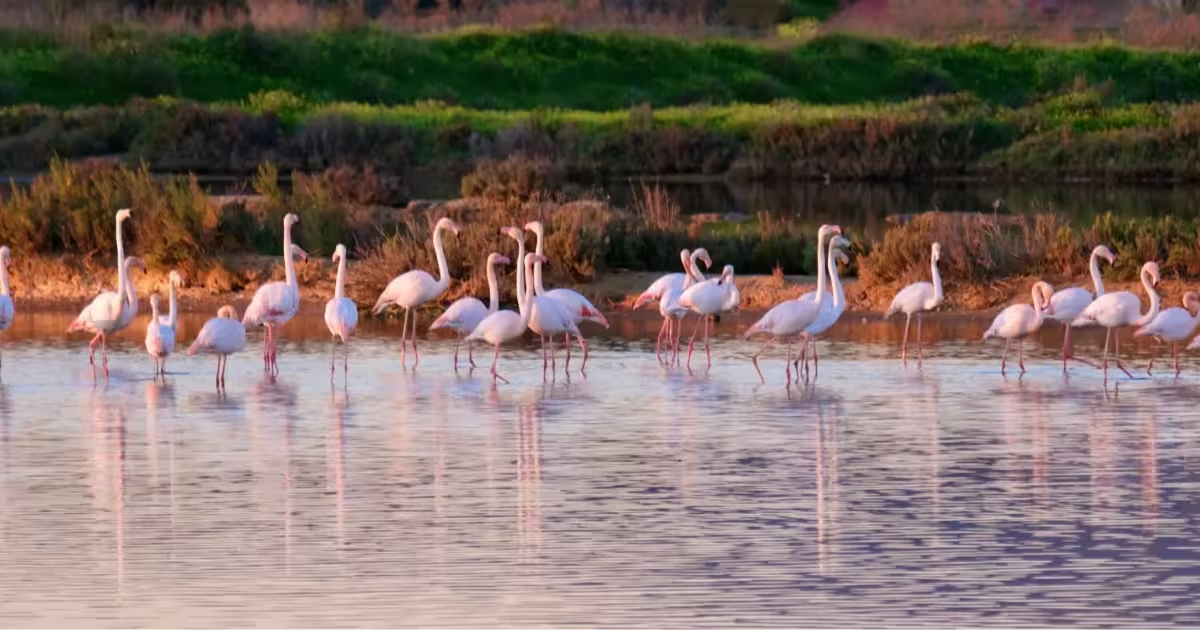
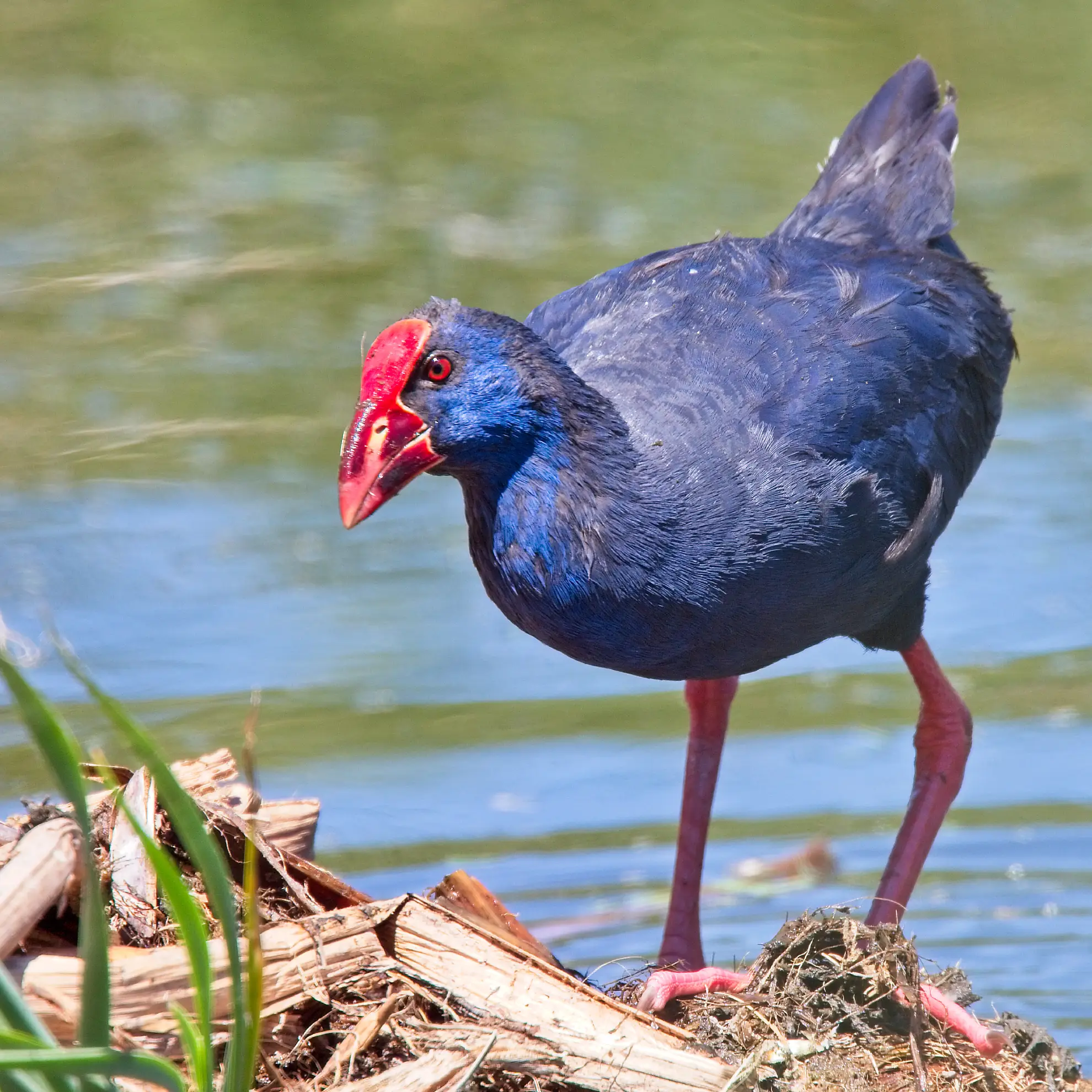
The park's signature resident is Porphyrio porphyrio (purple gallinule), a species with a stronghold here after near-extinction in Portugal during the mid-20th century. Ria Formosa now holds one of the species' largest Iberian populations. Greater flamingos (Phoenicopterus roseus) are present in flocks of several hundred throughout the year, particularly on the salt pans near Olhão and Tavira. Eurasian spoonbills and little egrets are regular throughout the tidal channels.
Winter brings significant numbers of wading birds to the intertidal mudflats. Avocets, black-tailed godwits, dunlins, and grey plovers concentrate on the exposed substrate at low tide near Faro island and the Quinta de Marim reserve. The passage seasons add curlew sandpipers, little stints, and occasional vagrant shorebirds from North America to the species list.
The salt pans between Olhão and Fuseta are among the most accessible waterbird sites in southern Portugal, with flamingos, spoonbills, and avocets often visible simultaneously from the roadside embankment.
Boat access across the lagoon channels dramatically extends the range of accessible sites. Several operators run dedicated birdwatching departures from Faro marina, allowing close approach to roost sites on the barrier islands and salt pan margins that are unreachable on foot.
How does the Costa Vicentina extend the Algarve's birdwatching corridor?
The Southwest Alentejo and Vicentina Coast Natural Park was designated in 1995 and covers 110,000 hectares of Atlantic coast north of Sagres, extending into the Alentejo region. Within the Algarve section, the park's vegetation is dominated by Atlantic scrubland composed of cistus, gorse, and heather, which supports a distinct breeding bird community largely absent from the eastern Algarve.
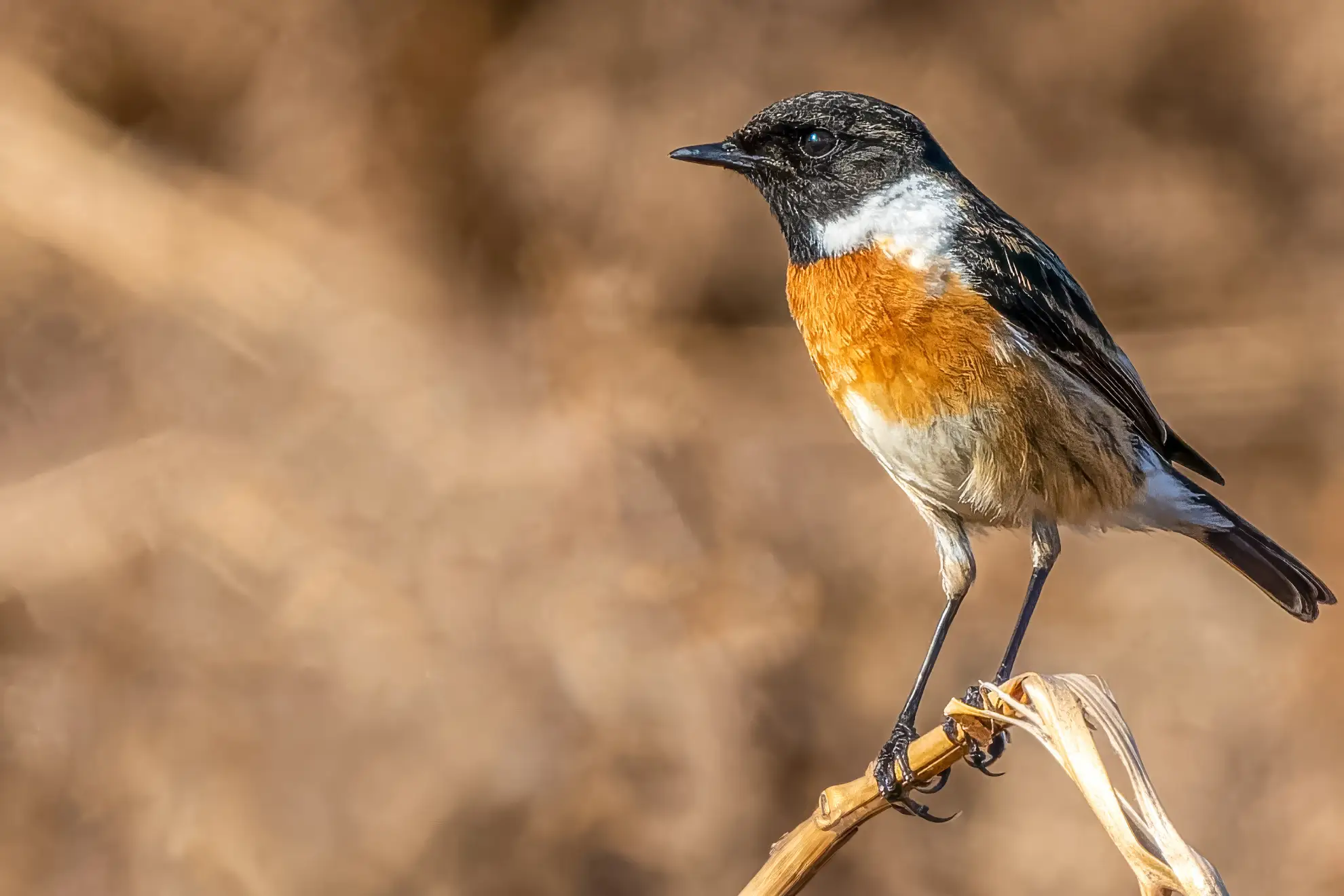
Key scrubland species include Saxicola rubicola (stonechat), Sylvia undata (Dartford warbler), and Circus pygargus (Montagu's harrier), which breeds in cereal fields adjacent to the park boundaries. Short-toed eagles hunt the open heath throughout summer, and stone curlews use the low-vegetation plateaux near Aljezur and Vila do Bispo. Thekla larks and corn buntings are resident along the agricultural margins.
The cliff-top habitats between Arrifana and Odeceixe provide seabird watching from land, with Cory's and Balearic shearwaters offshore and peregrine falcons nesting on the vertical rock faces. Off-road access via unpaved tracks between Carrapateira and Bordeira opens the inland wetlands and valley bottoms, where kingfishers, grey herons, and little grebes are found along the Carrapateira River tributaries.
The following table summarises key birdwatching sites across the three main habitat zones in the Algarve region, with target species and recommended visiting seasons.
| Site | Habitat Type | Key Species | Best Season |
|---|---|---|---|
| Sagres / Cabo de São Vicente | Headland, cliff-top scrub | Honey buzzard, black kite, Eleonora's falcon | August to November |
| Ria Formosa (Faro to Cacela Velha) | Tidal lagoon, salt pans, mudflats | Purple gallinule, flamingo, spoonbill, avocet | Year-round (peak winter for waders) |
| Costa Vicentina (Aljezur to Carrapateira) | Atlantic scrubland, river valleys | Dartford warbler, stonechat, short-toed eagle | March to October |
| Arade River Valley (Silves) | River corridor, orange groves | Kingfisher, grey heron, little egret, bee-eater | April to September |
| Olhão Salt Pans | Salt pans, tidal channels | Flamingo, black-winged stilt, curlew sandpiper | Year-round (peak July to October for waders) |
Off-Road Wildlife Tours in the Vicentina Natural Park
Birdwatching Boat Tours in Ria Formosa and Arade River
Browse all Algarve birdwatching and wildlife tours on ToursXplorer and filter by date, group size, or habitat type to find the tour that fits your itinerary.
Browse all Algarve tours on ToursXplorerPlanning a multi-day Algarve birdwatching circuit
Birders with three or more days in the Algarve can combine all three major habitat zones into a logical circuit. A practical itinerary starts in the west at Sagres and Cabo de São Vicente for headland watching, then follows the N120 north through Vila do Bispo into the Vicentina Natural Park for scrubland species. From Aljezur, the route crosses east through the Monchique foothills before descending to the Arade River valley at Silves. The final segment heads southeast on the A22 to Faro and the Ria Formosa lagoon system.
Autumn, from mid-September to late October, offers the most dramatic single-season experience, combining Sagres migration spectacle with early-winter wader arrivals in Ria Formosa. Spring, from late March to May, is the most productive period for breeding scrubland species in the Vicentina and for bee-eater and roller arrivals in the Arade valley.
ToursXplorer lists guided options across all three zones, including off-road Vicentina tours, Ria Formosa boat departures, and the Arade River combined history and wildlife excursion. Independent birders can use the platform to select guided access for specific habitats while self-guiding the remainder of their circuit. Most tours depart from Faro, Lagos, or Portimão, which are the main accommodation hubs for the western and central Algarve.
Practical logistics worth noting: Ria Formosa boat tours typically depart from Faro marina, approximately 3 kilometres from Faro railway station. The Vicentina off-road tours generally depart from Lagos or Sagres, roughly 30 kilometres apart. Hiring a vehicle remains the most flexible option for covering Sagres, the Vicentina, and the salt pans near Olhão within a single trip, though guided tours provide the advantage of expert identification and local site knowledge.
Conservation context and visitor responsibilities in protected Algarve habitats
Both Ria Formosa Natural Park and the Southwest Alentejo and Vicentina Coast Natural Park operate under Portuguese national park regulations administered by the Instituto da Conservação da Natureza e das Florestas (ICNF). Off-road driving is restricted to designated tracks within both parks, and access to certain sensitive areas, particularly purple gallinule nesting reedbeds in Ria Formosa, is controlled by seasonal closure zones.
Disturbance of nesting raptors is prohibited under the Decreto-Lei n.º 140/99, which transposed the EU Birds Directive into Portuguese law. During the autumn migration window at Sagres, the Grupo Português de Anilhagem (GPA) operates a licensed ringing station near the Sagres fortress, and visitors are encouraged to observe ringing operations at a respectful distance rather than handling ringed birds.
ToursXplorer's listed operators in both the Vicentina and Ria Formosa areas are required to comply with ICNF access regulations. Guided boat tours in Ria Formosa maintain mandatory buffer distances from flamingo and spoonbill roost sites, which protects both the birds and the quality of observation for visitors. Booking through a registered operator is therefore both the most responsible and the most effective way to access the lagoon's interior habitats.
Responsible birdwatching practices recommended by the International Ornithological Committee include avoiding playback of bird calls near active nests, keeping to marked trails in designated protected areas, and reporting unusual sightings to local natural history groups such as the Sociedade Portuguesa para o Estudo das Aves (SPEA), which maintains a regional office in Faro.
Book your Ria Formosa boat tour or Vicentina off-road excursion directly through ToursXplorer to confirm availability for 2026 departures.
Frequently Asked Questions
Sagres Peninsula and Cabo de São Vicente are the primary raptor watchpoints in the Algarve. Between August and November, honey buzzards, black kites, ospreys, and short-toed eagles concentrate at this southwestern headland before migrating to Africa. Peak counts occur in September and October; the lighthouse car park and Sagres fortress walls are the standard watching positions.
Ria Formosa is productive year-round, but winter (November to February) delivers the highest numbers of migratory waders including avocets, black-tailed godwits, and dunlins on the intertidal mudflats. Greater flamingos and purple gallinules are resident throughout the year. Spring brings breeding activity and the return of passage shorebirds from March onward.
Yes. Dedicated birdwatching boat tours depart from Faro marina into the Ria Formosa Natural Park lagoon system. These tours access flamingo roost sites, spoonbill feeding channels, and purple gallinule reed habitats that are not reachable on foot. ToursXplorer lists several departure options, including tours focused on seabirds and tours covering the full lagoon channel network.
Costa Vicentina off-road tours cover the Atlantic scrubland of the Southwest Alentejo and Vicentina Coast Natural Park, where Dartford warblers, stonechats, and Montagu's harriers breed. Short-toed eagles hunt the open heath, and peregrine falcons nest on the coastal cliffs. River valley sections add kingfishers and grey herons. Tours depart from Lagos or Sagres and are available as half-day, full-day, and sunset options.
The Arade River boat tour from the coast to Silves passes through orange and carob grove corridors where European bee-eaters, kingfishers, and grey herons are regularly observed between April and September. The tour combines wildlife observation with a visit to historic Silves, whose Moorish castle dates to the 10th century. It suits birders who also want cultural context alongside their nature experience.
Casual birdwatching on public paths in both parks requires no permit. However, access to certain sensitive zones, particularly nesting reebeds within Ria Formosa and off-road vehicle use in the Vicentina Natural Park, is regulated by the ICNF (Instituto da Conservação da Natureza e das Florestas). Booking a guided tour through a registered operator, as available on ToursXplorer, ensures compliance with current access restrictions.