10 Essential Things You Should Know Before Visiting Évora
1. Évora: A UNESCO World Heritage Gem
A City Steeped in History
Nestled in the heart of Portugal's Alentejo region, Évora is a city that wears its history with pride. Designated as a UNESCO World Heritage Site, Évora boasts a rich tapestry of cultural and historical landmarks that span centuries. From Roman ruins to medieval cathedrals, the city's architecture tells tales of its diverse past.
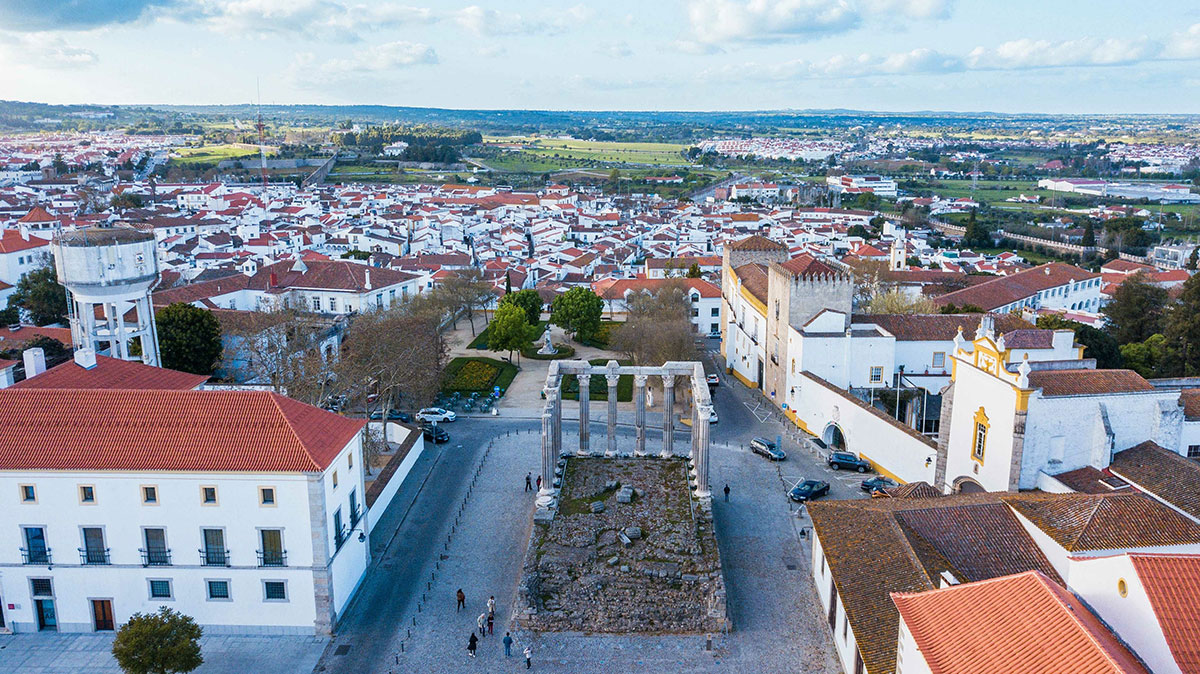 Évora’s skyline blends centuries of architecture, from Roman columns to medieval towers.
Walking through Évora's cobbled streets, one can't help but feel transported back in time. The city's well-preserved structures offer a glimpse into the lives of those who once called this place home. It's a living museum, where every corner holds a story waiting to be discovered.
Architectural Marvels and Ancient Streets
Évora's architecture is a harmonious blend of various eras. The Roman Temple stands as a testament to ancient engineering, while the Gothic Cathedral showcases medieval craftsmanship. The city's aqueduct, built in the 16th century, still stands tall, weaving through the urban landscape.
The narrow alleys and whitewashed houses add to the city's charm. As you meander through these streets, you'll encounter quaint squares, vibrant markets, and local artisans showcasing their crafts. Each step offers a new perspective, making Évora a delight for explorers and history enthusiasts alike.
2. The Roman Temple of Évora (Templo de Diana)
A Testament to Roman Engineering
One of Évora's most iconic landmarks, the Roman Temple, often referred to as the Templo de Diana, dates back to the 1st century AD. Despite its age, the temple's Corinthian columns remain remarkably intact, standing as a symbol of the city's Roman heritage.
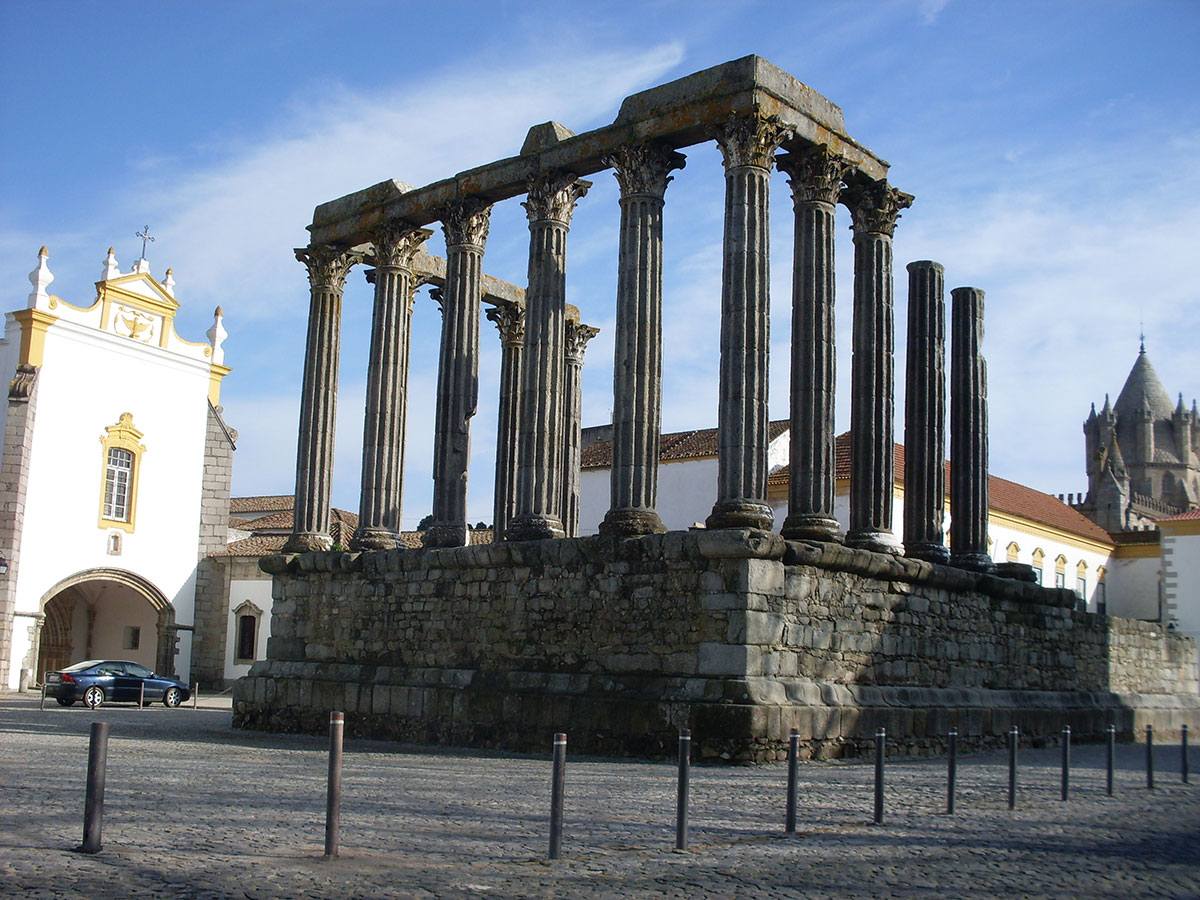 The Roman Temple of Évora—an enduring symbol of the city’s classical past.
The temple's exact dedication remains a topic of debate among historians. While traditionally associated with the goddess Diana, some believe it was dedicated to Emperor Augustus. Regardless, its grandeur and historical significance are undeniable.
The Temple's Role in Modern Évora
Today, the Roman Temple serves as a focal point in Évora's historic center. Surrounded by charming cafes and bustling streets, it seamlessly integrates into the city's daily life. Visitors often find themselves drawn to its majestic presence, capturing photos and soaking in the ambiance.
The temple's preservation is a testament to Évora's commitment to honoring its past. It's not just a relic; it's a living part of the city's identity, reminding both locals and tourists of the enduring legacy of ancient civilizations.
3. The Chapel of Bones (Capela dos Ossos)
A Macabre Yet Fascinating Site
The Chapel of Bones, located within the Church of St. Francis, is one of Évora's most intriguing attractions. As the name suggests, its interior walls are adorned with human bones and skulls, arranged in intricate patterns. This 17th-century chapel was constructed by Franciscan monks who aimed to convey the transient nature of life.
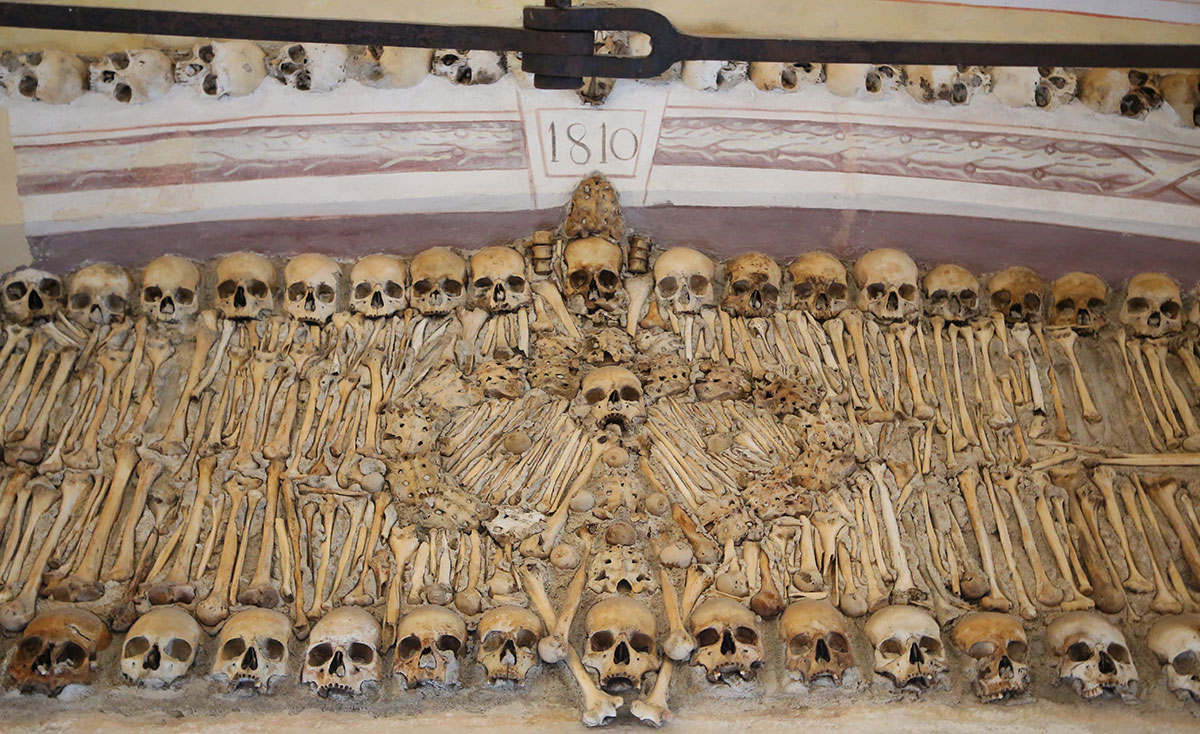 A somber yet fascinating experience inside Évora’s Chapel of Bones.
Upon entering, visitors are greeted with the chilling inscription: "We bones that are here, await yours." It's a stark reminder of mortality, prompting reflection on the impermanence of human existence.
Reflecting on Mortality and Artistry
While the chapel's decor might seem morbid, it's also a profound artistic expression. The meticulous arrangement of bones showcases a unique blend of reverence and creativity. It's a place where art meets philosophy, challenging visitors to contemplate life's deeper meanings.
Beyond its macabre aesthetics, the Chapel of Bones offers insight into the religious and cultural practices of the time. It stands as a powerful symbol of faith, mortality, and the human desire to find meaning in the face of death.
4. Alentejo Cuisine: A Culinary Delight
Traditional Dishes to Savor
Évora's culinary scene is a reflection of the Alentejo region's rich gastronomic heritage. The cuisine here is characterized by hearty flavors, rustic ingredients, and time-honored recipes passed down through generations.
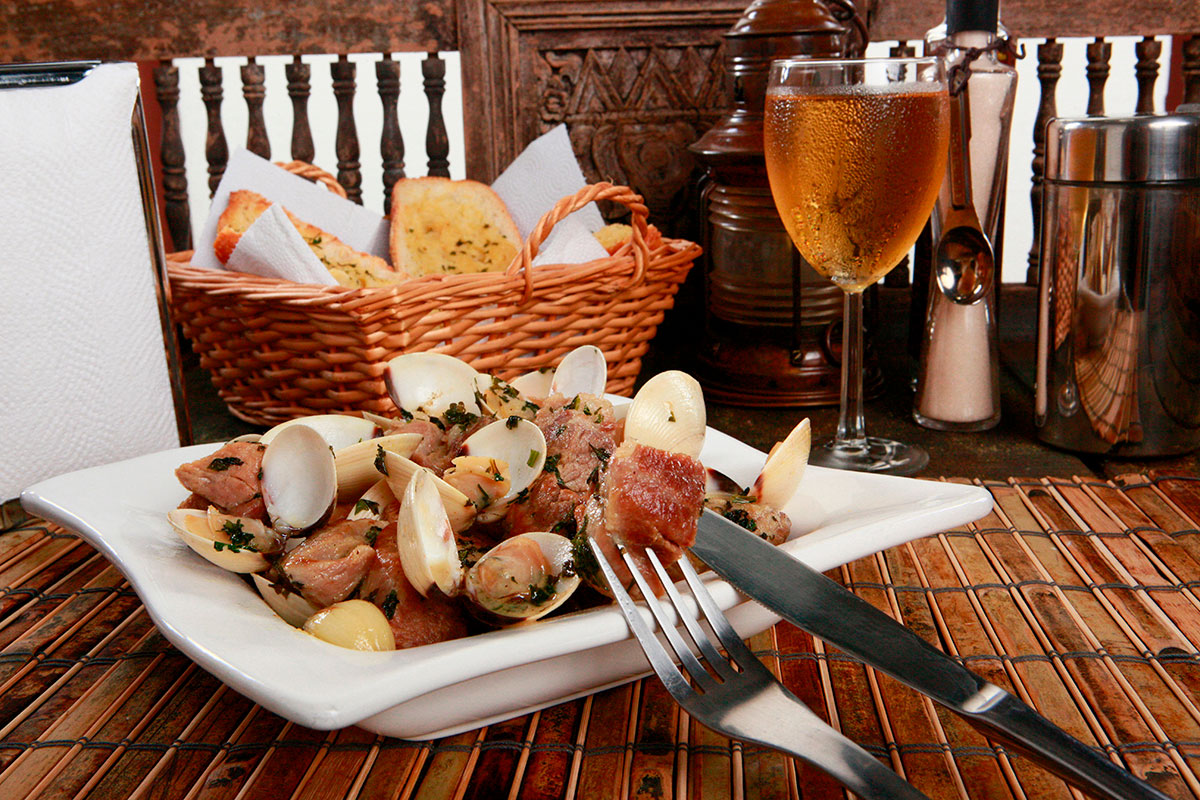 Discover Évora’s culinary soul through hearty, time-honored Alentejo recipes.
One must-try dish is "Açorda à Alentejana," a bread-based soup flavored with garlic, cilantro, and poached eggs. Another favorite is "Carne de Porco à Alentejana," a delightful combination of marinated pork and clams. For dessert, "Sericaia," a cinnamon-infused egg pudding, offers a sweet conclusion to any meal.
Where to Dine in Évora
Évora boasts a plethora of dining establishments, ranging from traditional taverns to upscale restaurants. For an authentic experience, consider visiting local eateries where recipes have remained unchanged for decades. These establishments not only serve delicious food but also offer a glimpse into the region's culinary traditions.
Don't forget to pair your meal with a glass of Alentejo wine, renowned for its robust flavors and exceptional quality. Many restaurants offer extensive wine lists, allowing diners to explore the diverse offerings of the region.
5. Alentejo Wine Tours: A Taste of the Region
Exploring Local Vineyards
The Alentejo region is synonymous with wine production, boasting vast vineyards that stretch across rolling hills. Évora serves as a gateway to this vinous paradise, with numerous wineries located just a short drive away.
 Savor award-winning Alentejo wines on a vineyard tour near Évora.
Embarking on a wine tour offers visitors the chance to delve into the winemaking process, from grape harvesting to fermentation. Many vineyards welcome guests for guided tours, providing insights into traditional techniques and modern innovations.
Wine Tasting Experiences
Wine tastings are a highlight of any visit to the Alentejo region. Wineries often offer curated sessions where guests can sample a variety of wines, each showcasing the unique terroir of the area. From robust reds to crisp whites, there's something to suit every palate.
Participating in these tastings not only enhances your appreciation for Alentejo wines but also supports local producers. It's an immersive experience that combines education, indulgence, and cultural enrichment.
6. Megalithic Sites Around Évora
Almendres Cromlech and Other Ancient Wonders
Long before the Romans and medieval settlers shaped Évora, prehistoric communities left their mark on the Alentejo landscape. Among the most remarkable of these remnants is the Almendres Cromlech, often dubbed the “Portuguese Stonehenge.” This megalithic site, just a short drive from Évora, consists of over 90 granite stones arranged in elliptical formations, dating back more than 7,000 years.
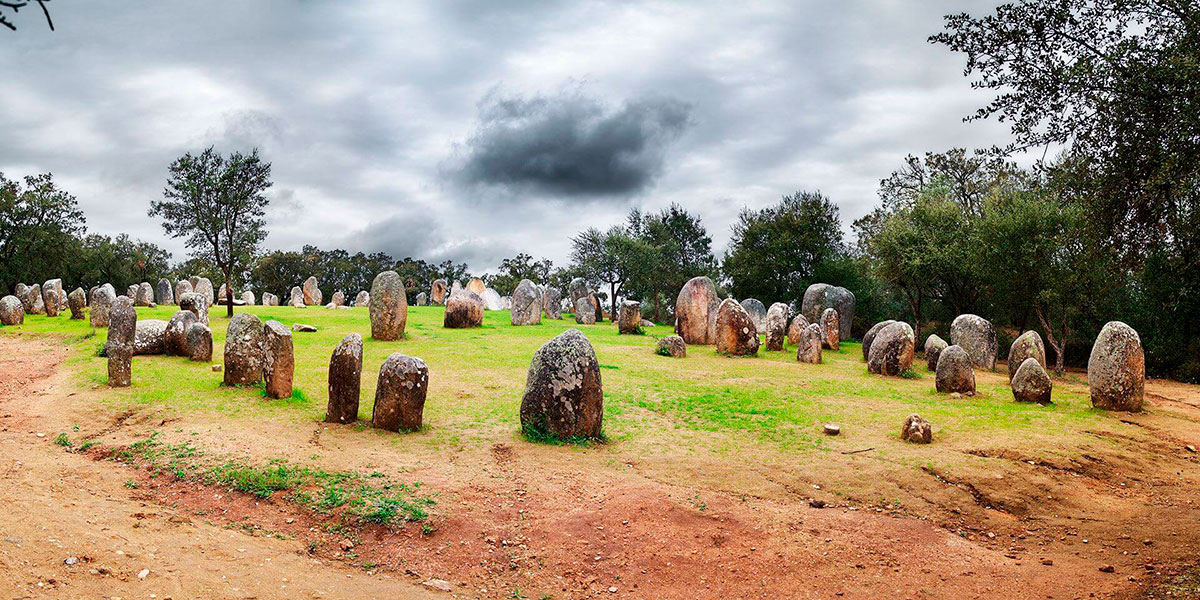 Step into prehistory at Almendres Cromlech—Portugal’s answer to Stonehenge.
A visit to Almendres feels like stepping into a time machine. Picture this: the golden sun rising over rolling hills, casting long shadows across the standing stones as your local guide explains their possible astronomical and spiritual purposes. Whether you’re a history buff, a nature lover, or a seeker of ancient mysteries, this site offers a profound experience.
The Significance of These Sites
Megalithic sites like Almendres provide a glimpse into the spiritual life of Neolithic peoples. Their exact purpose remains a subject of scholarly debate—were they celestial observatories, sacred gathering spots, or burial grounds? Whatever the answer, their existence adds another fascinating layer to Évora’s already rich historical narrative.
These monuments also highlight the continuity of human presence in the region, predating even the city’s Roman roots. Don’t miss the nearby Menhir of Almendres and the Anta Grande do Zambujeiro—both awe-inspiring in scale and significance.
Ready to explore ancient wonders? Discover Toursxplorer.com’s guided tours to Almendres Cromlech and beyond.
7. Best Time to Visit Évora
Seasonal Highlights
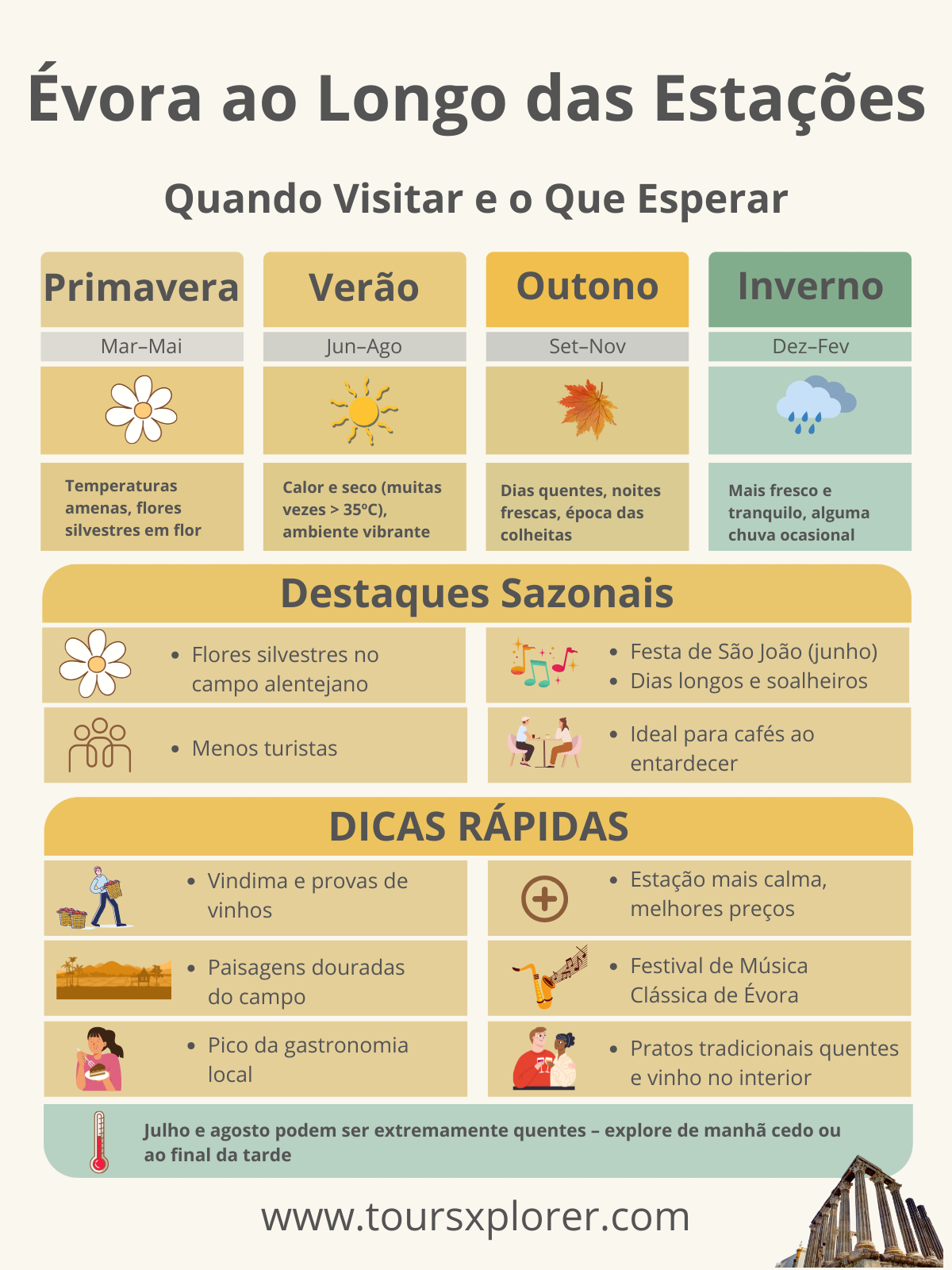
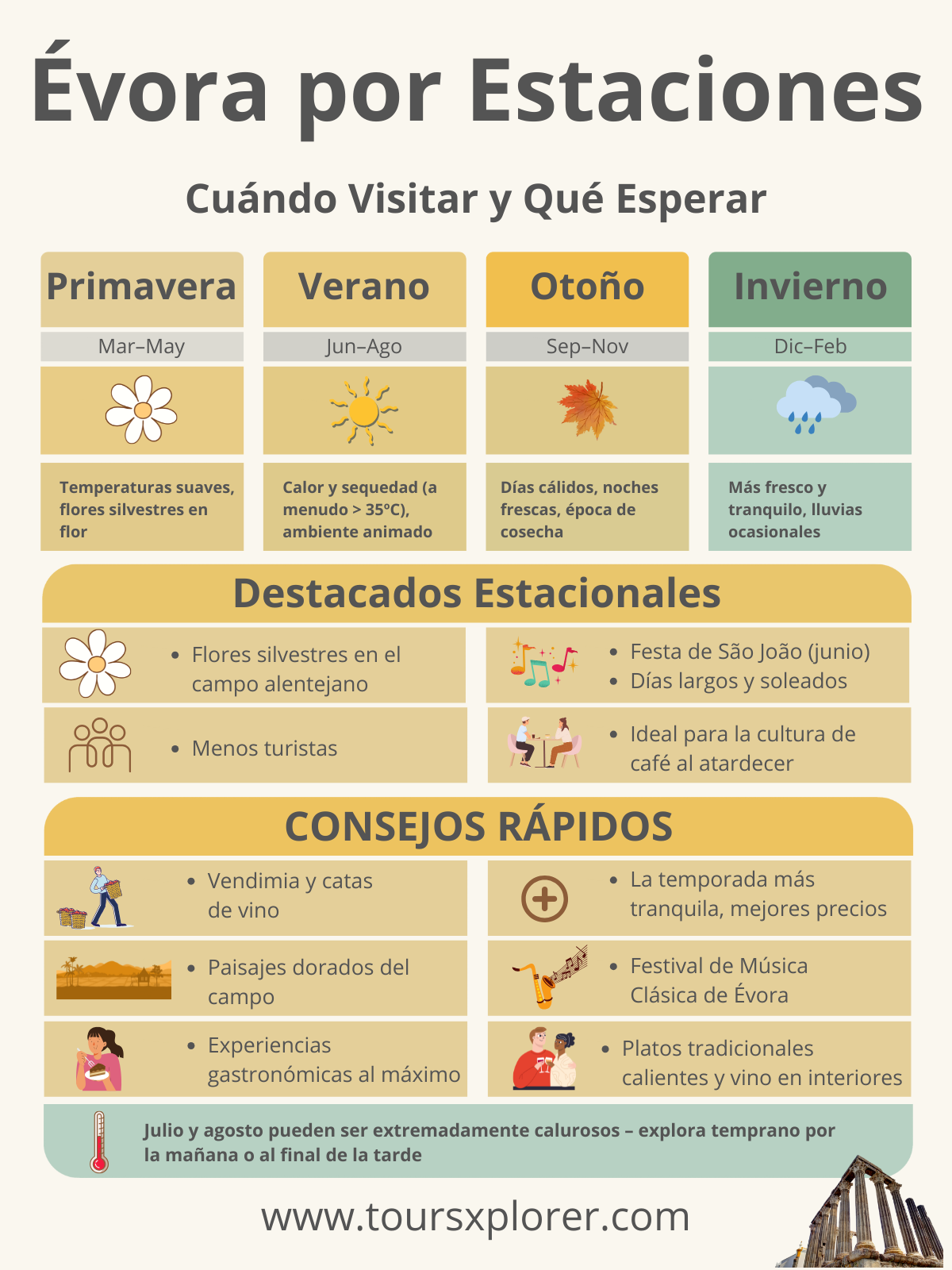

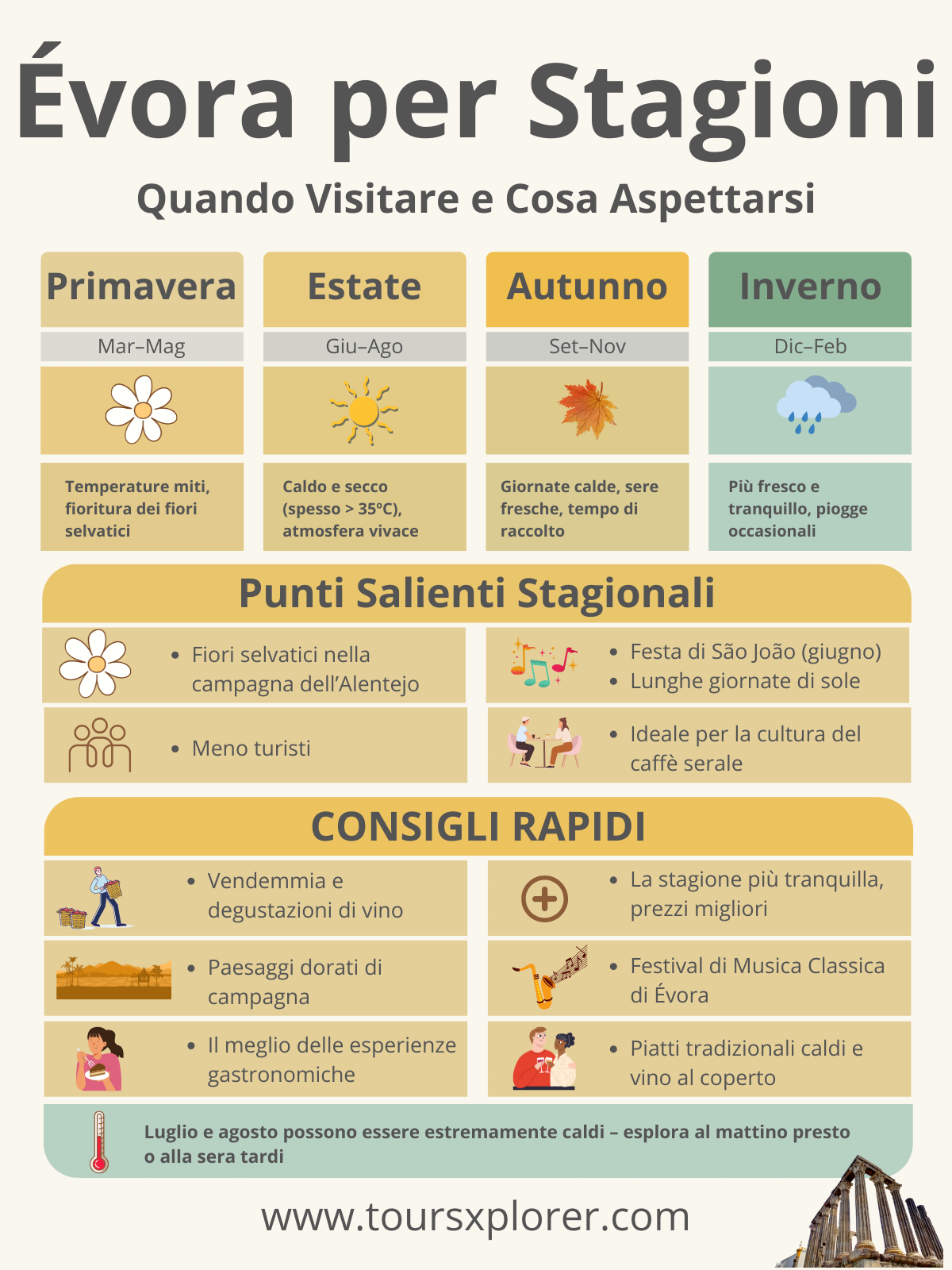
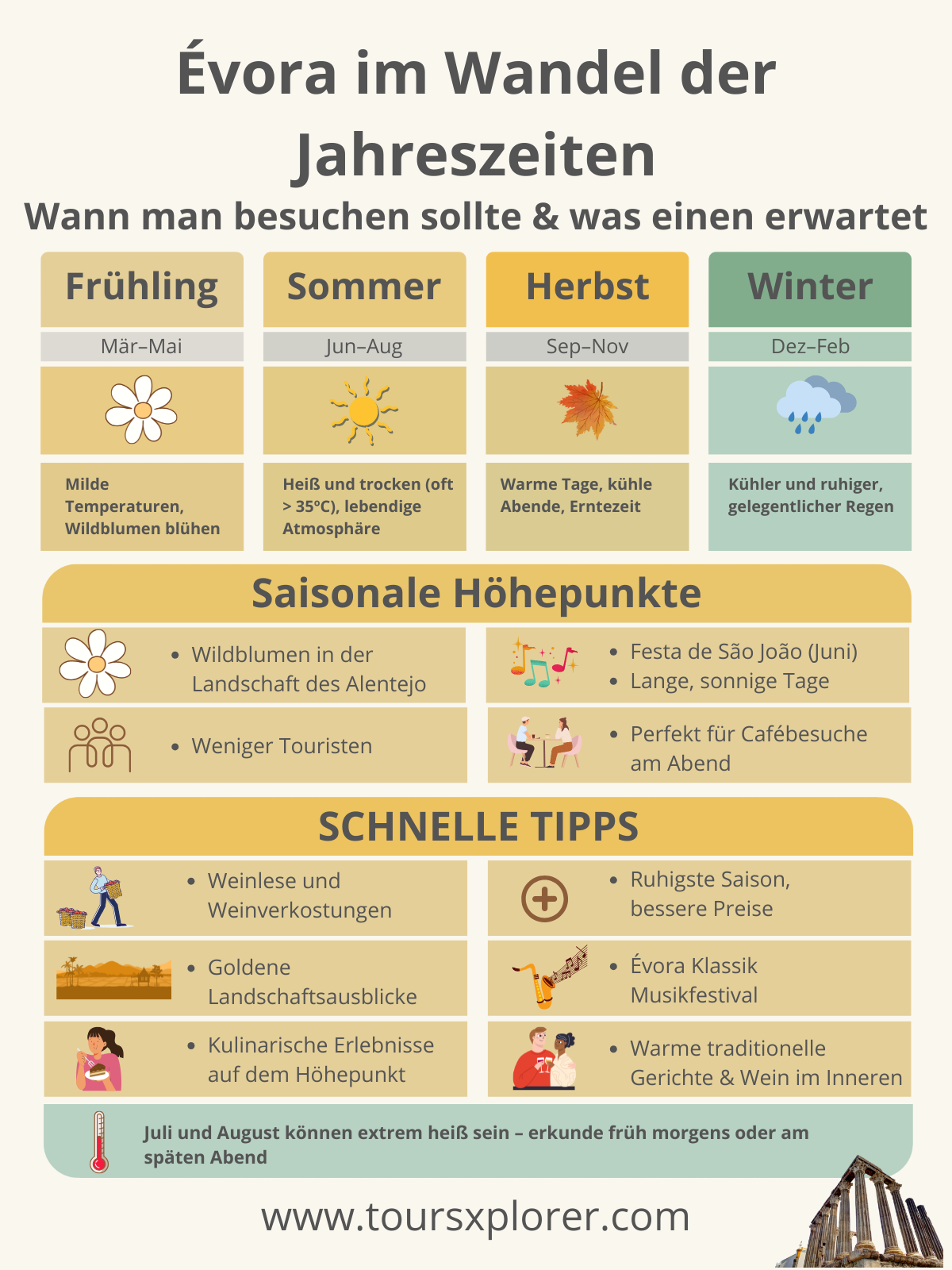
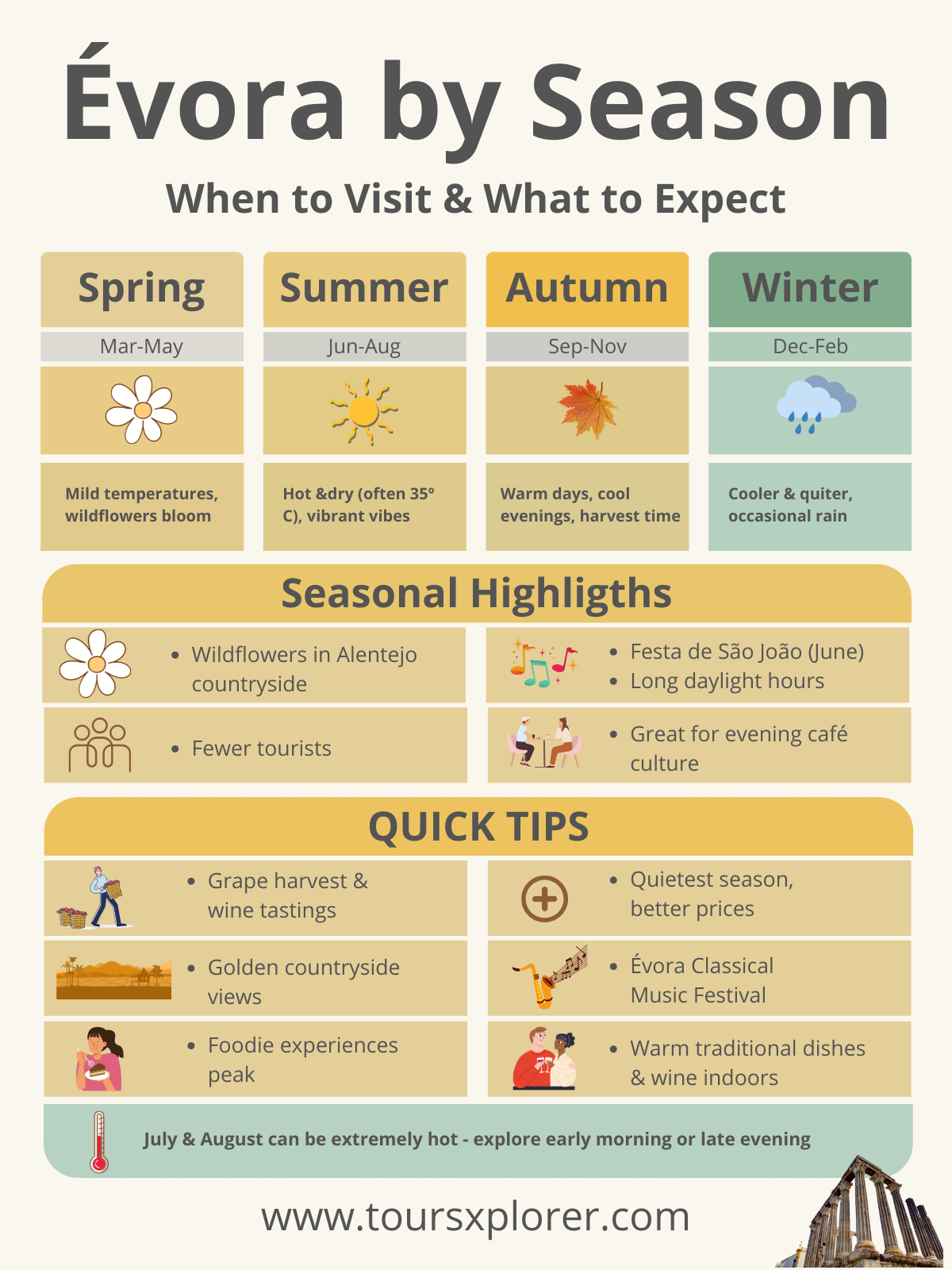
Each season in Évora offers something unique—plan your visit accordingly!
Évora is a year-round destination, but each season offers its own unique charm. Spring (March to May) is ideal for exploring the city, as temperatures are mild, and the countryside is blanketed with wildflowers. The weather is perfect for walking tours, and you’ll avoid the intense summer heat.
Summer (June to August), while hot, is lively with festivals and outdoor events. Expect daytime temperatures soaring past 35°C (95°F), so pack your sunhat and hydrate! Autumn (September to November) is harvest time—a great season for Alentejo wine tours and enjoying the vibrant fall colors.
Winter (December to February) is quieter, making it ideal for travelers who prefer fewer crowds and cooler weather. While it might rain occasionally, you’ll enjoy a more intimate side of Évora, especially in its cozy restaurants and historical sites.
Festivals and Events
Planning your trip around local events adds an extra layer of excitement. Évora hosts several festivals, including the Festa de São João in June, which features traditional music, food stalls, and lively parades. There’s also the Évora Classical Music Festival, drawing talent from around the world into ancient settings like churches and plazas.
If you're in town during these events, don’t just watch—immerse yourself in the celebration! Locals are warm and welcoming, and participating gives you a richer sense of Évora’s community spirit.
Looking for the best seasonal tours? Check out Toursxplorer.com for the latest event-based experiences in Évora.
8. Getting Around Évora
Transportation Options
Évora is a compact city, and most of its top attractions are within walking distance of the historic center. Walking is not just convenient—it’s the best way to appreciate the city’s charming details, from azulejo tiles to hidden courtyards.
That said, taxis and rideshare services are readily available for longer distances, and there are local buses for getting to suburbs and nearby sites. Planning to explore beyond Évora? Renting a car is highly recommended. It gives you the freedom to visit vineyards, megalithic sites, and quaint villages that dot the Alentejo countryside.
Trains and buses from Lisbon to Évora are efficient and budget-friendly, making it an easy day trip or weekend escape. The train journey takes about 1.5 hours and offers scenic views of rural Portugal.
Navigating the City
The historic center is a labyrinth of narrow streets, some of which are cobbled and pedestrian-only. Wear comfortable shoes and bring a city map or GPS. Keep in mind that signage may not always be in English, but locals are generally helpful and many speak at least basic English.
Pro tip: Start your day early to beat the heat and crowds, especially if you're planning to visit popular spots like the Roman Temple or the Cathedral.
Need help planning your route? Book a guided walking tour on Toursxplorer.com and explore Évora like a local.
9. Local Customs and Etiquette
Cultural Norms to Respect
Portuguese culture values politeness and respect, and Évora is no exception. A simple “bom dia” (good morning) or “obrigado/a” (thank you) goes a long way. When entering shops or restaurants, it’s customary to greet the staff with a smile and a nod.
Tipping isn’t obligatory in Portugal, but it’s appreciated—typically 5-10% of the bill in restaurants. Dress modestly when visiting religious sites, and keep your voice down in churches and museums.
If you're invited into someone’s home or a private vineyard, consider bringing a small gift or expressing gratitude with a warm compliment—it’s the little gestures that count here.
Engaging with Locals
Évora locals, or Eborenses, are proud of their heritage and love sharing stories about their city. Don't hesitate to strike up a conversation, especially in cafés or markets. You might end up learning about a hidden ruin or a restaurant only the locals know.
Trying out a few Portuguese phrases—even just “por favor” (please) or “desculpe” (excuse me)—will be met with smiles and encouragement.
Want an authentic connection with Évora’s culture? Join one of our local-led cultural tours on Toursxplorer.com.
10. Hidden Gems and Authentic Experiences
Off-the-Beaten-Path Attractions
While the Roman Temple and Chapel of Bones are must-sees, Évora has plenty of lesser-known treasures. One such gem is the University of Évora, one of the oldest universities in Portugal, housed in a 16th-century Jesuit college. The mix of ancient cloisters and youthful energy creates a unique vibe.
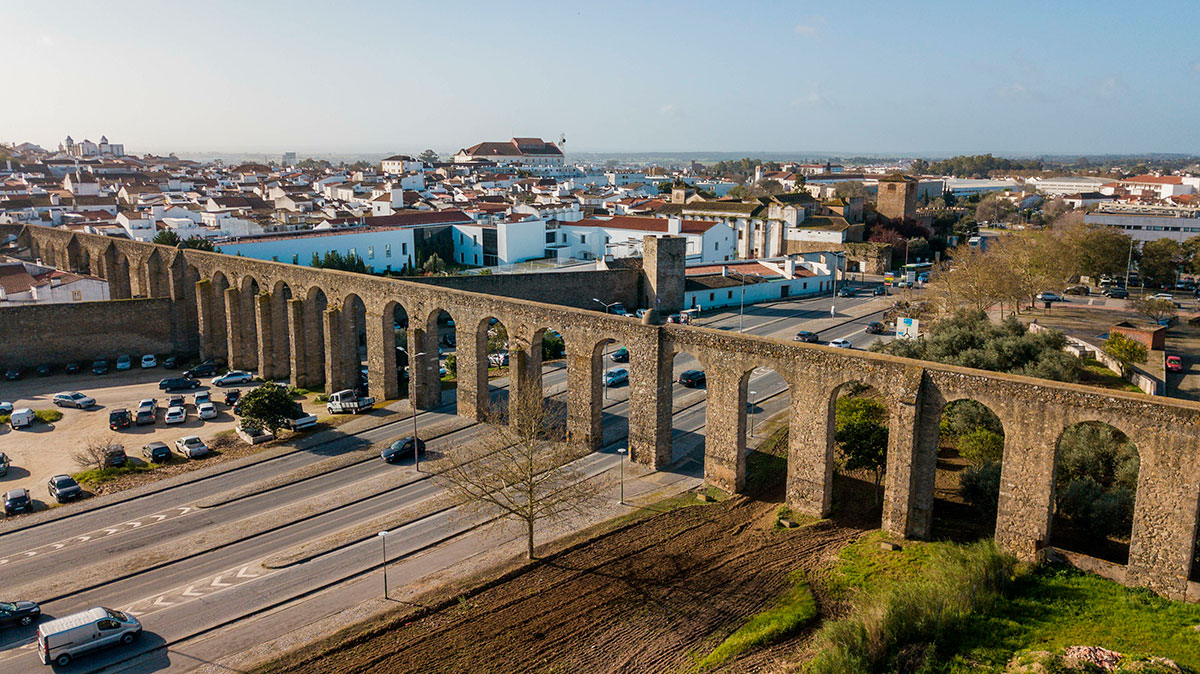 The Aqueduto da Água de Prata flows through Évora’s urban fabric—quite literally.
Then there's the Aqueduto da Água de Prata—a 16th-century aqueduct that winds its way through the city, even integrating into homes and shops! Walking its path gives you a deeper appreciation of Évora’s ingenuity.
Don’t miss the tiny museum of the Cathedral cloisters or the rustic Church of São João Evangelista with its rare tile panels.
Immersive Activities
To truly experience Évora, go beyond sightseeing. Join a pottery workshop in São Pedro do Corval, sample olive oils at a family-run farm, or book a sunrise hot air balloon ride over the Alentejo plains.
Imagine yourself wandering into a small tasca (tavern), where the owner pours you a house-made wine and serves warm bread with local cheese and olive oil. These moments are where the soul of Évora truly reveals itself.
Explore the real Évora. Book immersive experiences now at Toursxplorer.com.
Conclusion
Évora is more than a destination—it's a journey through time, taste, and tradition. With its UNESCO-listed heritage, captivating historical landmarks, rich Alentejo cuisine, and welcoming locals, it offers a travel experience like no other in Portugal.
Whether you’re marveling at Roman ruins, sipping wine at a sun-drenched vineyard, or wandering quiet cobblestone streets, every moment in Évora feels like a beautifully crafted story waiting to unfold.
Let Toursxplorer.com help you live that story—book your unforgettable Évora experience today.
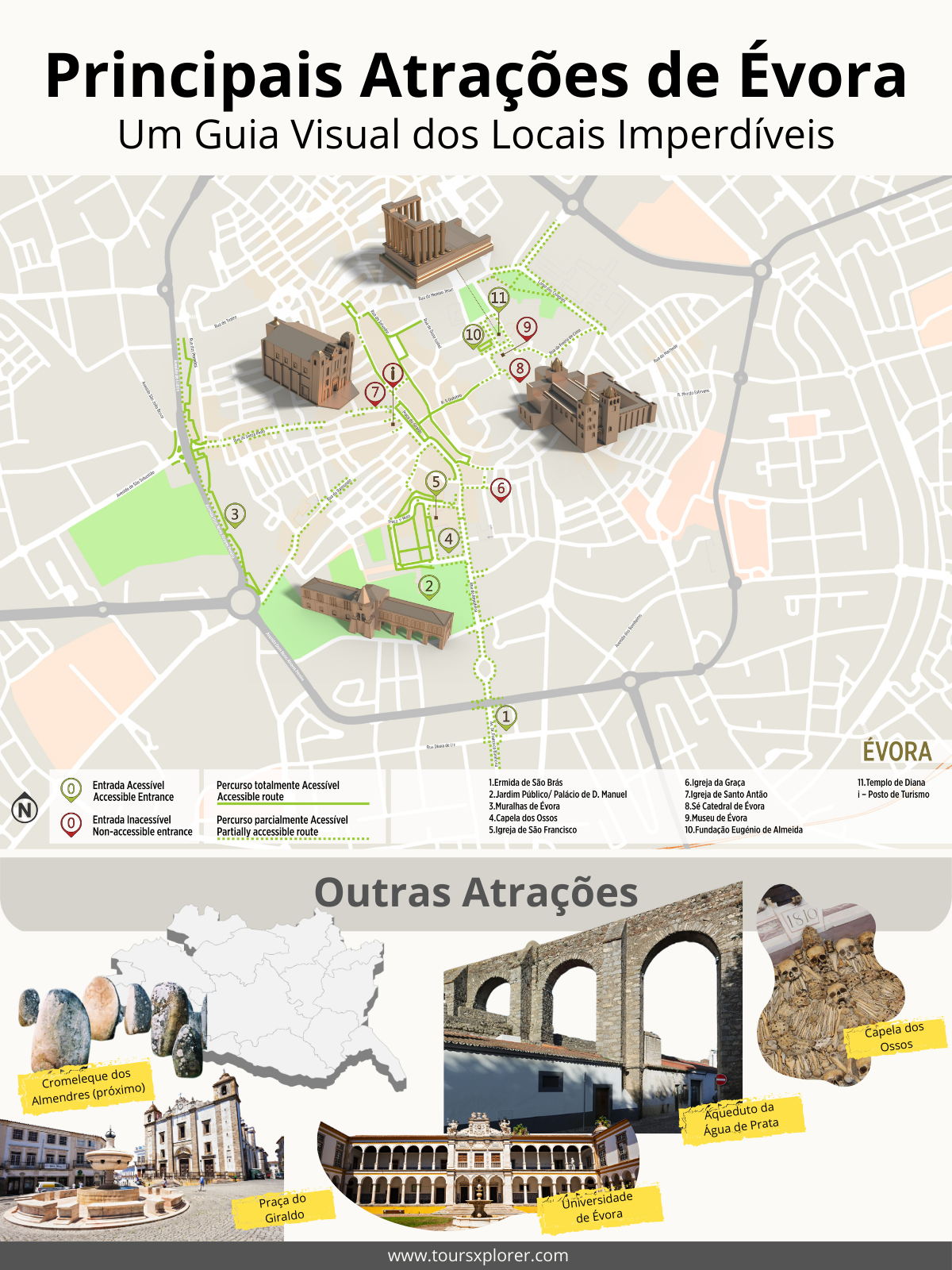
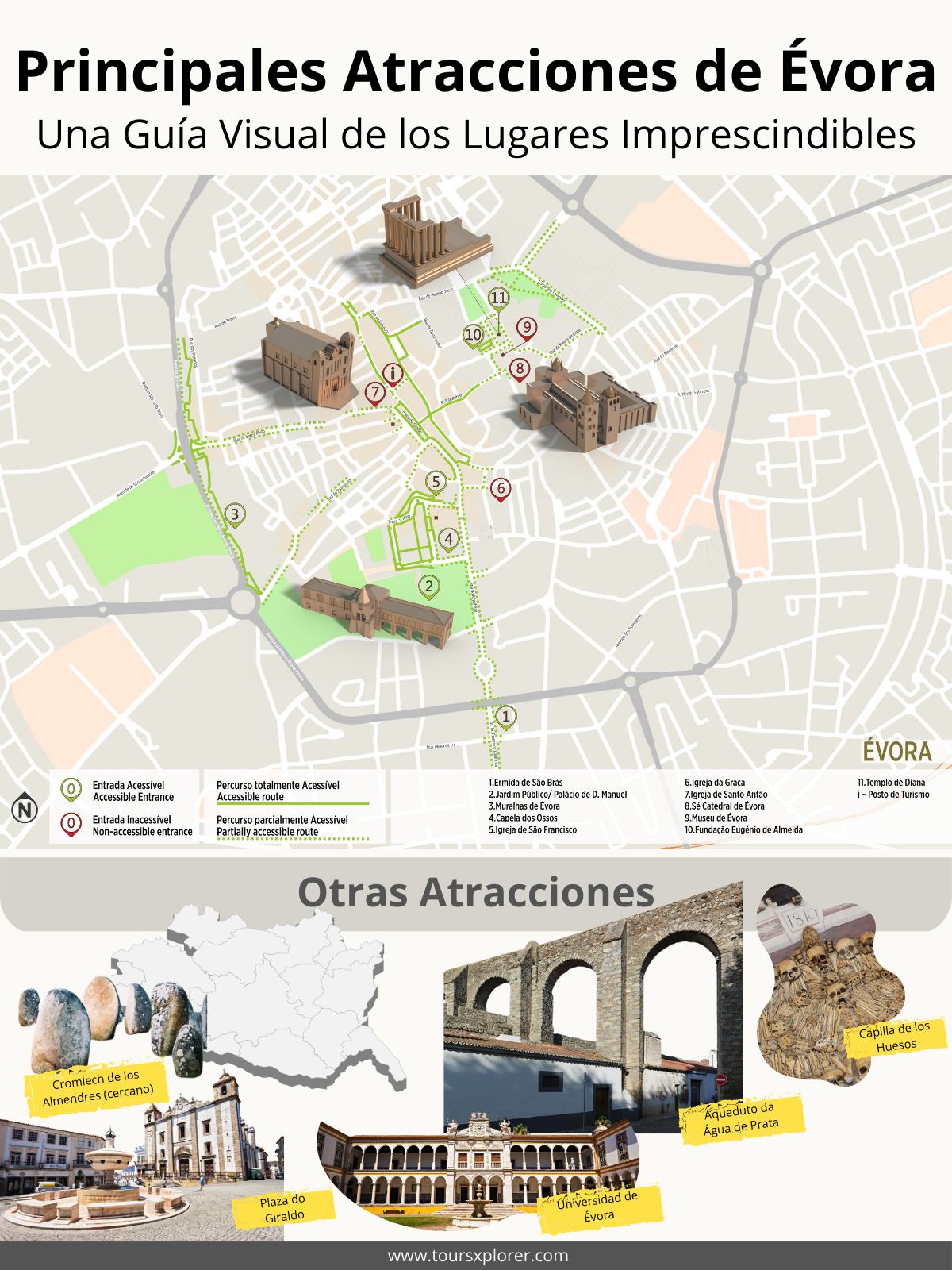
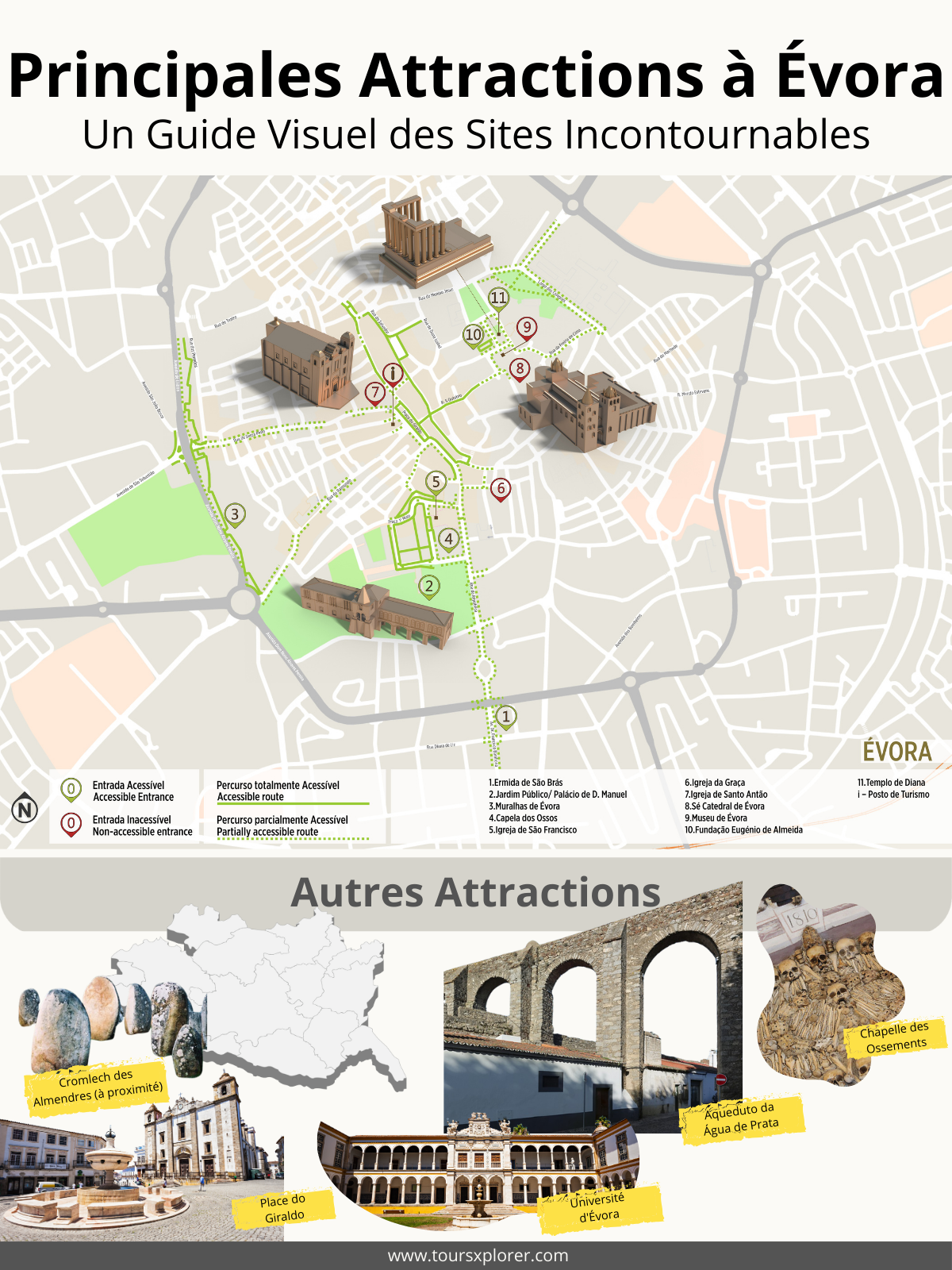
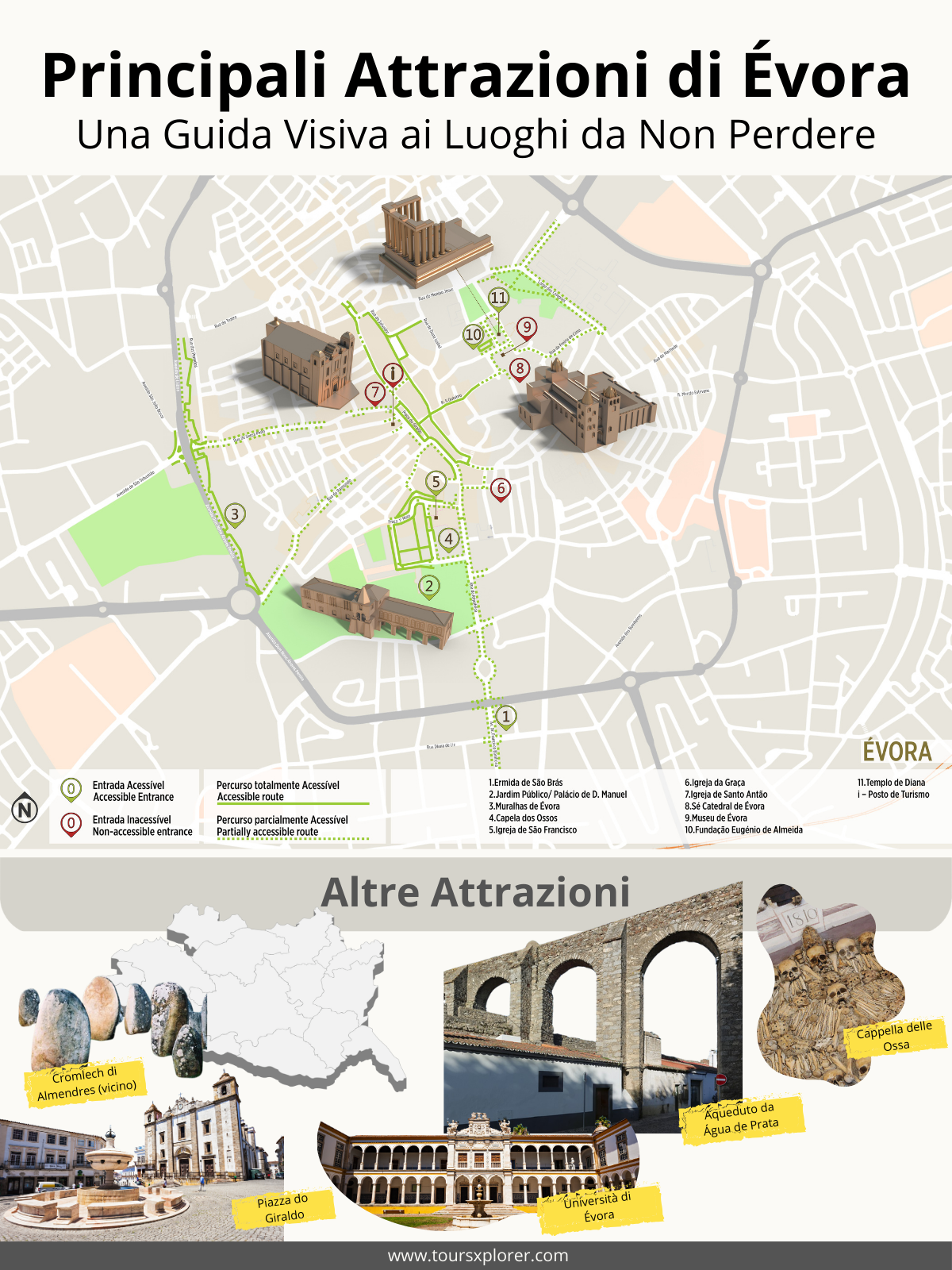
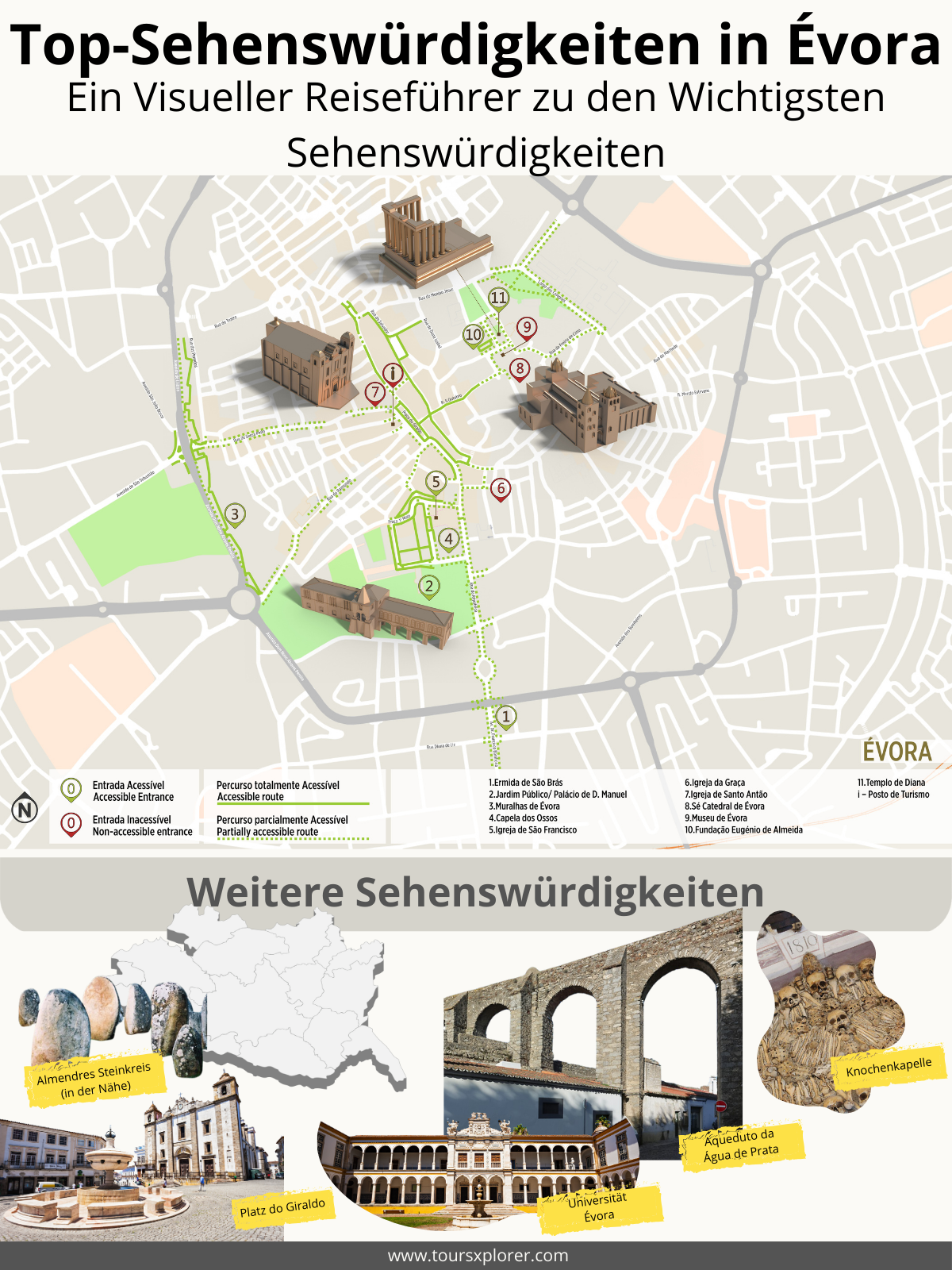
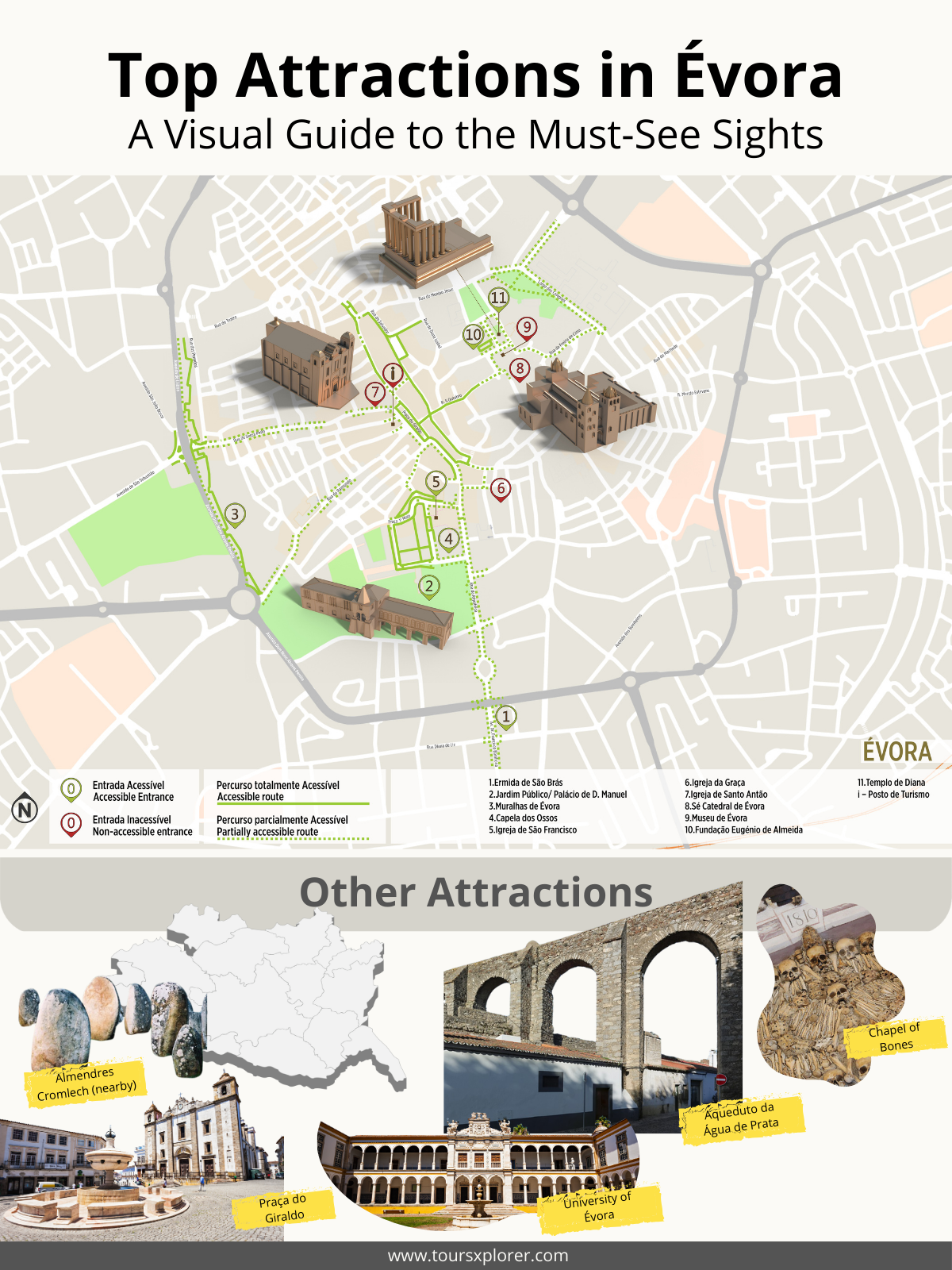
Get your bearings with this map of must-see sights in Évora’s historic center.
FAQs
1. Is Évora a good day trip from Lisbon?
Yes, Évora is perfect for a day trip or weekend getaway from Lisbon, just 1.5 hours by train or car.
2. Are English speakers common in Évora?
Many locals in the tourism industry speak English, especially in hotels, restaurants, and tour services.
3. What should I wear when visiting Évora?
Comfortable walking shoes are a must. Modest clothing is recommended for visiting churches and religious sites.
4. Can I visit vineyards near Évora without a car?
Some vineyards offer shuttle services or can be reached by taxi, but renting a car or booking a wine tour is more convenient.
5. What makes Toursxplorer.com tours unique?
Our expert-led tours are curated to deliver authentic experiences with easy online booking—designed for travelers who want more than just a photo op.