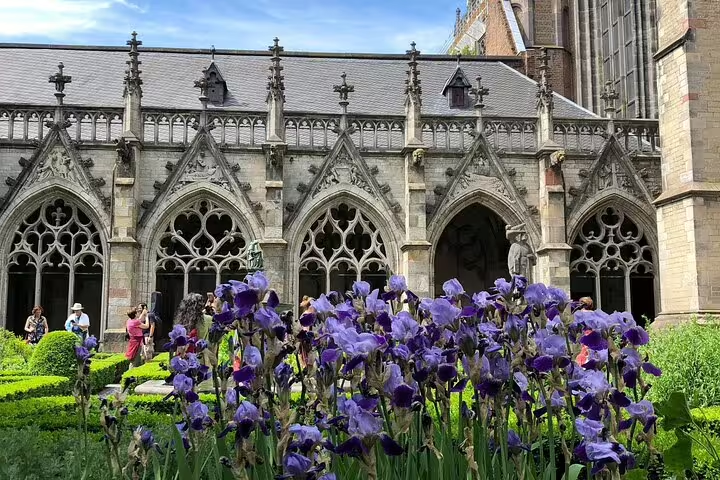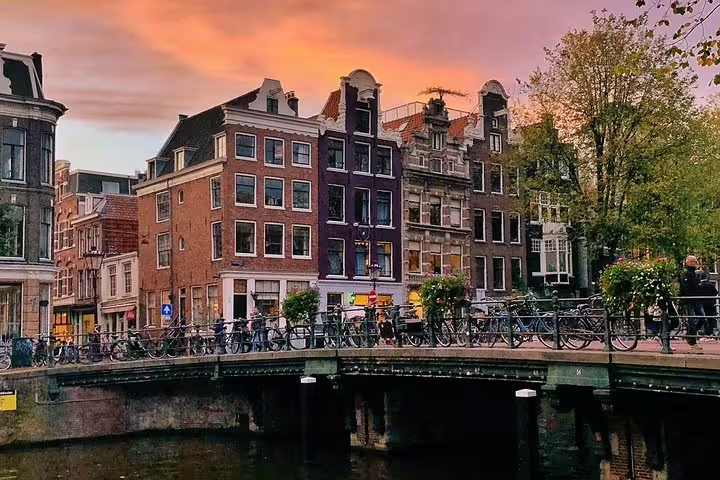
A History Tour is a guided way to step into the past through iconic landmarks, layered architecture, and the small local stories that bring streets to life. Whether you prefer museums, hidden alleys, or grand civic squares, this format helps you connect names and dates to real places and human moments. Travelers who enjoy culture, photography, and context rich sightseeing will find a History Tour especially rewarding, from first time visitors to seasoned history travel enthusiasts.
Most History Tour itineraries focus on a walkable core such as a historic city center or a preserved old town tour district, often linking plazas, memorials, and key historical sites. Meeting points are commonly near a central transit hub or a well known landmark; arrive early to find your guide and confirm the route.
Ticketing varies by operator and format, with both free tip based options and paid experiences that may include museum entry. Opening hours vary by season and by venue access, especially if the route includes a museum tour or timed entry sites; a typical History Tour lasts 2 to 4 hours. Reservations are often recommended for peak seasons, weekends, and small group departures, and the best entry windows are usually early morning or late afternoon for smoother pacing and better light.
Accessibility depends on the route and terrain, as cobblestones, stairs, and narrow lanes are common in older quarters. Many operators can offer step free alternatives, ramps, lifts in major museums, and accessible toilets at larger venues; some provide audio devices or written summaries on request. If you need a fully step free route, confirm this before booking and ask whether the walking history tour includes steep gradients or long standing periods.
Prioritize iconic landmarks, museums, and hidden alleys, and focus on heritage, architecture, and culture. Emphasize expert guiding, practical timing, and an immersive time travel feel through local stories.
A typical History Tour begins with a brief orientation, then moves in a logical timeline, often starting at the oldest surviving quarter before progressing to later expansions and civic centers. Expect frequent stops for stories, maps, and architectural details, with optional interior visits when the itinerary includes museums, churches, or preserved homes. Common pitfalls include underestimating walking time on uneven surfaces, arriving late and missing the introduction, and not checking whether entries require timed tickets, especially for popular museums or protected historical sites.
For most departures, public transport is the simplest option because historic cores can have limited vehicle access and scarce parking. Use a central station or main transit stop as your anchor, then walk to the meeting point with extra time for navigation through older street networks. If you drive, plan to park outside the core and continue on foot or by local transit; in warm months bring water and sun protection, and in wet seasons wear shoes with good grip for slick stone paths.
Many routes are designed so you can cluster visits within one neighborhood, minimizing transit and maximizing context.
Q1: How long does a History Tour usually take, and how much walking is involved?
Most tours run 2 to 4 hours and involve steady walking with frequent stops for explanations and photos. Distances vary, but uneven paving and standing time can make it feel longer than the map suggests.
Q2: What is included in the ticket, and do I need to book in advance?
Inclusions depend on the operator, some cover guiding only, while others bundle entries for a museum tour segment or specific venues. Booking ahead is recommended in high season or for small group departures, especially if the History Tour includes timed entry sites.
Q3: Where do tours typically meet, and how do I find the guide?
Meeting points are usually at a central landmark, a main square, or outside a major transit stop near the historic core. Arrive 10 to 15 minutes early, look for a sign or badge, and confirm the tour name before joining.
Q4: What happens if the weather is bad, or if I travel in the off season?
Most tours operate in light rain, so bring a waterproof layer and footwear with grip for stone streets. In the off season, schedules may be reduced and some interiors may have shorter hours, but crowds are often lower and pacing can be more relaxed.
Q5: Are History Tours accessible, and what languages are usually available?
Accessibility varies by route, many historic areas include steps, narrow lanes, and cobblestones, but operators may offer step free alternatives if requested early. Common languages depend on the destination and provider, and a History Tour may be available in multiple languages or with audio support on select departures.
Not every History Tour is the same, and choosing the right style helps you get the depth you want without feeling rushed. A classic city history tour is best for first time visitors because it explains the overall timeline and the urban layout, while a local history tour focuses more on neighborhoods, daily life, and lesser known episodes. If you love grand silhouettes and defensive stories, look for a castle tour; if you prefer evidence in the ground, an archaeological tour or ancient ruins tour adds structure, excavation context, and clear explanations of what you are seeing.
For destinations with globally recognized preservation, a UNESCO World Heritage tour often emphasizes conservation, authenticity, and why the site is considered part of shared cultural heritage. If your interests are more modern, a historical tour centered on recent centuries can cover social change, industrial growth, migration, and memorial culture, sometimes including a battlefield tour or remembrance focused route. When comparing options, check whether the experience is a compact overview or a deep dive into a specific period, and whether it is primarily outdoors or includes interiors.
Comfort and timing matter on any History Tour, because the best storytelling happens when the group can stop safely and hear clearly. Wear comfortable shoes and consider layers, as historic districts can be breezy in open squares and warmer in sheltered lanes. Bring a small bottle of water, keep valuables secure in crowded areas, and avoid large bags if the itinerary includes museums with security checks.
To make the most of architecture and details, stand slightly back from façades and look for guide cues such as cornices, inscriptions, and changes in stonework. If photography matters, ask when you will have a few minutes at major viewpoints, and save indoor photos for moments that do not disrupt explanations. Finally, if you have mobility needs, confirm the route profile in advance and request a step free plan, as older districts can change quickly from flat boulevards to steep lanes.
Many travelers can identify famous buildings, but a guided history tour explains why those places mattered, what came before them, and how communities reshaped them over time. Guides often connect written records with what is visible today, such as street widths, defensive lines, reused stones, and commemorative plaques. This is especially valuable in a historic landmarks tour where the most important clues are easy to overlook without context.
A strong guide also helps you navigate sensitive topics with care, from conflict and displacement to religious and political change, keeping the experience informative and respectful. When a route includes museums, the guide can link a key artifact to a building you will see later, turning separate attractions into one coherent narrative. The result is a clearer understanding of place, and a richer sense of cultural heritage that lingers long after the walk ends.
When planning, travelers often compare a walking history tour against a bus based overview, or look for themes such as a heritage tour in an old town tour setting. Others search for a museum tour combined with street level storytelling, or a route that prioritizes major historical sites without long lines. If you want a balanced itinerary, choose a History Tour that mixes signature landmarks with quieter alleys, and confirm whether it includes interiors or is fully outdoors.
Popular long planning queries include best guided history tour for first time visitors, small group walking history tour with local guide, family friendly history tour with interactive stories, history tour with museum entry included, UNESCO World Heritage tour with expert guide, accessible history tour with step free route, evening history tour for cooler temperatures, and private cultural history tour for photographers. Use these as a checklist when reading tour descriptions and deciding what matters most to you.