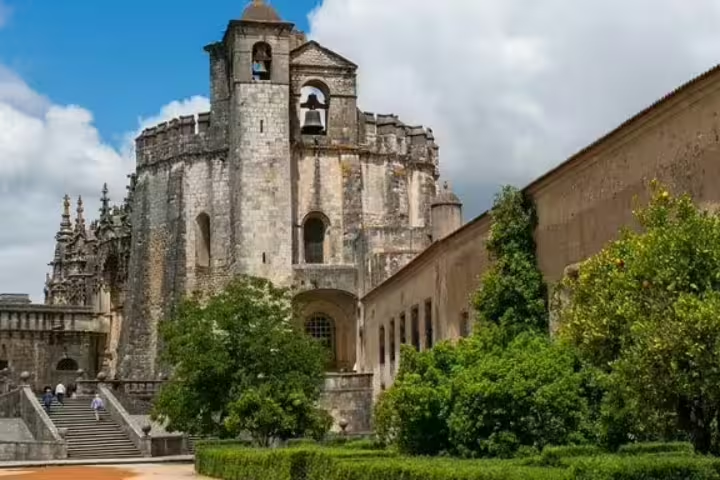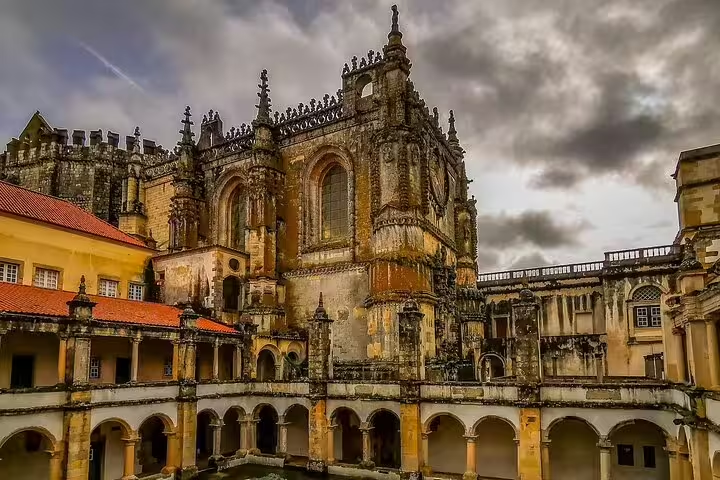




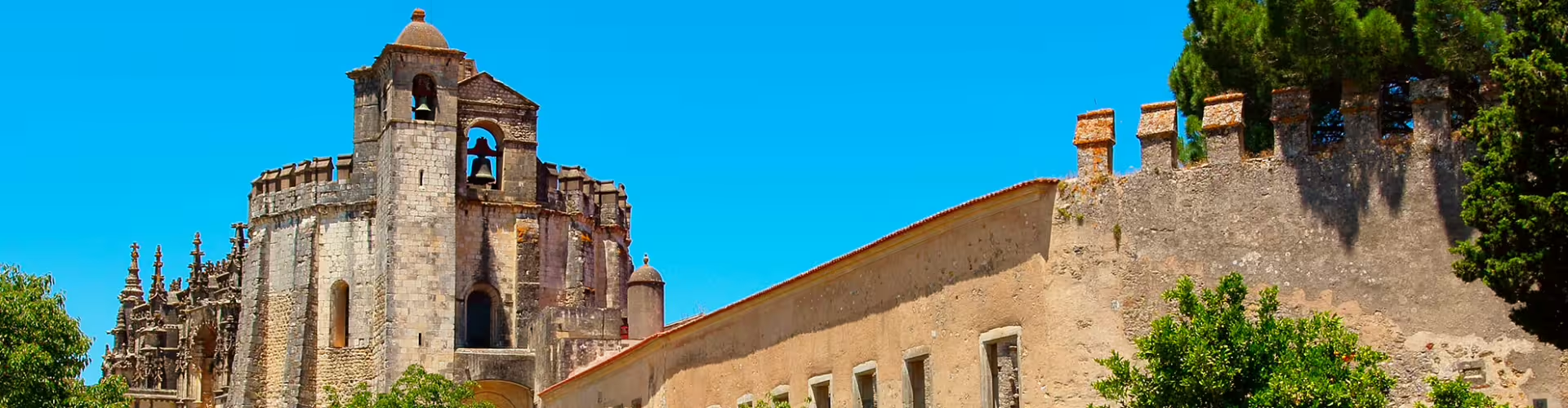
Tomar is a graceful riverside town in the Santarém District where medieval streets lead to one of Portugal’s most important monuments, the Convento de Cristo. With deep Knights Templar stories, remarkable Manueline architecture, and an easy to navigate old town along the Nabão River, it suits history lovers, photographers, and travelers planning a relaxed day trip to Tomar from Lisbon or Porto.
Set in Tomar Portugal, this historic town is best known for the UNESCO listed Convento de Cristo, a masterpiece tied to the Knights Templar and Portugal’s Age of Discoveries. Visit Tomar in Portugal if you want a compact, walkable destination that combines a monumental hilltop complex, a medieval old town, and a scenic riverside setting. It is also a standout choice for travelers who enjoy cultural festivals, especially the colorful Festa dos Tabuleiros when the town’s streets become part of the celebration.
Tomar sits in the Santarém District in central Portugal travel, within the historic region of Ribatejo. The town center is walkable, with the main sights connected by short uphill and flat routes; the hilltop monument is above the old town. Arrive by rail or bus to Tomar station and continue on foot or by taxi to the historic center; drivers will find public parking areas near the center, then continue on foot for the most convenient visit flow.
Town streets, riverside areas, and many viewpoints are free to enjoy; entry to the Convento de Cristo is paid, with prices typically in the mid range for major Portuguese monuments, and it can vary by season and ticket type. Reservations are not required for the town itself, but timed entry or arriving earlier in the day is wise for the convent on busy weekends and during festival periods. Plan about 3 to 6 hours for a well paced visit covering the convent and the old town, or a full day if you add museums, churches, and long riverside breaks.
Accessibility varies by site. The old town has uneven pavements and occasional slopes; the hilltop complex includes steps, thresholds, and historic surfaces, with some step free segments but limited full step free coverage. Look for accessible toilets where available in larger public facilities, and consider a taxi for the uphill approach to reduce steep walking; if you need step free routes, allow extra time and focus on the most accessible sections first.
Emphasize the UNESCO significance of the UNESCO World Heritage Tomar monument, the town’s Templar heritage, and the standout Manueline architecture details. Balance the hilltop experience with the medieval old town and the riverside atmosphere, and acknowledge the cultural impact of the Festa dos Tabuleiros when planning timing.
A typical visit starts in the old town for an easy orientation, then moves uphill to the Convento de Cristo and Templar Castle Tomar while energy is highest, before returning to the riverside for a slower finish. If you are building a Tomar itinerary, allow extra time inside the monument because the route includes multiple cloisters and transitions that reward slow looking, especially for Manueline architecture details. Common pitfalls include underestimating the uphill walk, arriving at the convent at peak midday crowds, and rushing the interior spaces; start earlier or visit later in the afternoon for a calmer pace.
For many travelers, the simplest approach is a train or bus connection into Tomar, then a walk or short taxi ride to the historic center and the hilltop monument. Planning a Lisbon to Tomar route is straightforward with public transport, and Porto to Tomar is also feasible with connections, making it a realistic addition to a wider central Portugal travel plan. If you drive, park near the center and continue on foot to avoid narrow streets; in summer, carry water and sun protection for the uphill sections, and in winter, expect occasional rain that can make historic stone surfaces slippery.
Igreja de Santa Maria do Olival, a key church linked to the Templar story, is a rewarding stop for quiet atmosphere and historic context.
Synagogue of Tomar, combine this with nearby lanes and small museums for a compact cultural loop.
Mouchão Park, ideal for a break by the Nabão River and an easy photo stop between major sights.
Old town viewpoints and medieval streets, cluster these with the convent for a balanced half day plan.
Seasonal street decorations and processional routes, especially relevant if your timing aligns with the Festa dos Tabuleiros.
Plan 3 to 6 hours to see the Convento de Cristo and enjoy the old town at a comfortable pace. If you want museums, churches, and longer river breaks, a full day works best.
The town itself is free to explore, but the Convento de Cristo is a paid monument and is the main ticketed site. Tickets generally cover access to the convent areas and the castle precinct, with pricing and hours varying by season.
Start in the old town to get oriented, then head up to the Convento de Cristo and Templar Castle Tomar earlier in the day to avoid peak congestion. Finish along the Nabão River and Mouchão Park for a calmer end to your route.
The best time to visit Tomar is spring and autumn for comfortable walking, clear light, and fewer crowds. Summer is lively and bright but hotter on the uphill routes, and festival periods like the Festa dos Tabuleiros can significantly increase visitor numbers and change traffic patterns.
Accessibility varies, with uneven pavements in the old town and steps and historic surfaces in the monument complex; some sections are easier than others. In Visit Tomar in Portugal settings, staff at major sites typically communicate in Portuguese and often English, and you can usually navigate the visit with clear signage and standard visitor information.